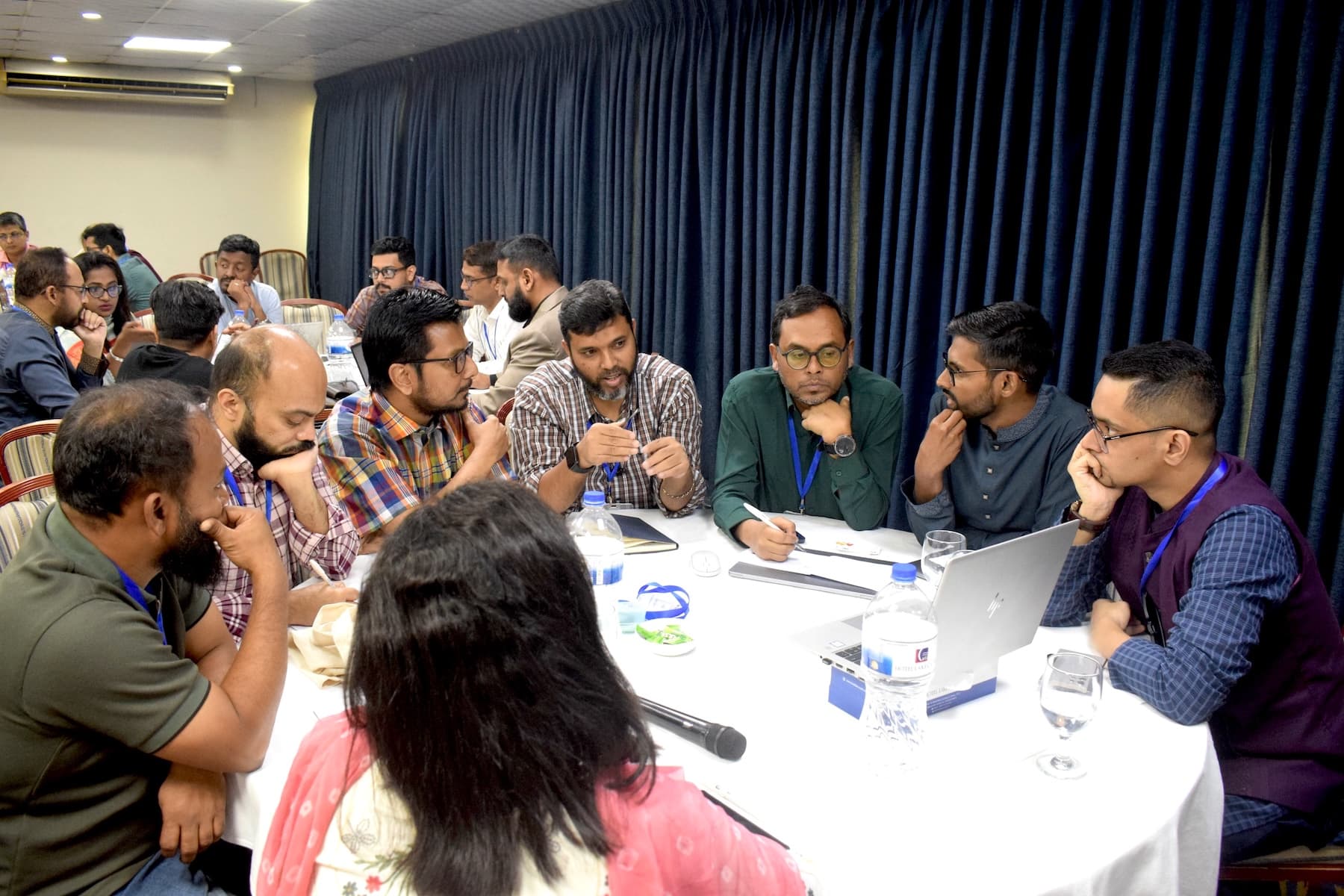

Why In 2026 You Must Automate Your Business – And Why Odoo ERP Is the Perfect Partner
Why In 2026 You Must Automate Your Business – And Why Odoo ERP Is the Perfect Partner
By Sadiq M Alam, Odoo ERP Consultant, 10+ Years of Experience
TL;DR
- Automation isn’t optional in 2026 – it’s a survival skill.
- Odoo ERP is a cloud‑native, open‑source platform that lets you automate quickly, affordably, and at scale.
- Companies that adopt Odoo cut costs by 30‑50 %, speed up cycles by 25‑40 %, and lift customer satisfaction by 15‑20 %.
- Implementation takes 3–6 months; ROI often shows in the first 90 days.
1. The Automation Imperative of 2026
In the last decade, digital transformation moved from hype to baseline. By 2026 the convergence of AI, IoT, and cloud architecture demands new realities.
Driver Impact on Business
- Workforce Expectations: 83 % of Gen‑Z employees say they expect advanced digital tools (Gartner, 2025).
- Customer Demands: 75 % of buyers prefer digitally‑enabled buying experiences (Adobe, 2024).
- Cost Pressure: Automation cuts operational costs by 35 % on average (McKinsey, 2023).
- Regulatory Complexity: 68 % of SMEs feel overwhelmed by compliance reports (Deloitte, 2024).
- Supply‑Chain Volatility: AI‑driven logistics predict disruptions 72 % faster than legacy systems (IBM, 2025).
Bottom line: If your business isn’t automating by 2026, you’ll be playing catch‑up, not leading.
2. Why Automation Matters
2.1 Boost Productivity
Automation removes repetitive manual tasks, freeing 5–8 hours per employee per week for higher‑value work such as strategy, development, or customer engagement.
2.2 Reduce Errors
Human errors cost the U.S. economy $5.2 trillion annually (Dell Technologies, 2022). Automated workflows enforce rules, ensuring consistency and cutting rework costs.
2.3 Scale Faster
When growth spikes, manual processes bottleneck. Automation scales horizontally: add users, add transactions, without hiring or retraining.
2.4 Gain Real‑Time Insights
Integrated dashboards provide end‑to‑end visibility. Decision‑makers spot trends, forecast demand, and react in minutes instead of days.
2.5 Enhance Compliance
Automation enforces audit trails, version control, and regulatory checklists. Compliance becomes a built‑in feature, not a chore.
3. Odoo ERP – The Automation Workhorse
Odoo is a modular, open‑source ERP that powers over 200,000 companies worldwide. What makes it shine for 2026 automation?
| Feature | Why It Matters |
|---|---|
| Unified Platform | One database, one UI; eliminates data silos. |
| Modularity | Start with core modules (Sales, Invoicing) and add industry‑specific apps on demand. |
| Open‑Source Flexibility | Custom code on your terms; no vendor lock‑in. |
| Self‑Hosted or Cloud | Deploy on‑premise, private cloud, or Odoo.sh for hassle‑free SaaS. |
| AI & Machine Learning | Predictive analytics, demand forecasting, and intelligent routing. |
| Low Cost of Ownership | Licenses start at $8/user/month; infrastructure can use existing hardware. |
| Active Community | 1,000+ developers, 25,000+ apps, continuous updates. |
4. Core Automation Capabilities in Odoo
4.1 Sales & Marketing Automation
- Lead Scoring: AI‑driven scores prioritize outreach.
- Email Campaigns: Triggered emails based on customer actions.
- Quotation to Cash: Auto‑create orders, invoices, and payment reminders.
4.2 Finance & Accounting Automation
- Double‑Entry Accounting: Real‑time journal entries from every transaction.
- Automated Reconciliation: Bank statements matched to invoices in seconds.
- Tax Compliance: Auto‑apply rules per jurisdiction; audit‑ready reports.
4.3 Inventory & Supply‑Chain Automation
- Purchase Requisition: Reorder points trigger purchase orders.
- Demand Forecasting: AI predicts stock levels, reducing stock‑outs by 30 %.
- Multi‑Warehouse Management: Routes shipments to nearest warehouse automatically.
4.4 Manufacturing & Production Automation
- MRP: Materials requirements planning with just‑in‑time logic.
- Shop Floor Control: Real‑time production monitoring and defect tracking.
- Quality Control: Automated inspections and audit trails.
4.5 Human Resources Automation
- Onboarding: Auto‑create user accounts and assign training modules.
- Payroll: Automatic tax calculations and digital payslips.
- Time Off Requests: Self‑service approvals, accruals, and reporting.
4.6 Custom Workflow Automation
Odoo Studio lets you build custom modules without code.
- Drag‑and‑drop form fields, views, and actions.
- Create automated email alerts, internal notifications, and dashboards.
5. Success Stories: Real Numbers
| Company | Industry | Challenge | Odoo Solution | Results |
|---|---|---|---|---|
| LogiTech Solutions | Manufacturing | Fragmented ERP & legacy MES | Odoo Manufacturing + MRP | 35% less BOM errors, 25% faster cycle time |
| HealthNet Clinics | Healthcare | Unaligned patient data | Odoo CRM + Hospital Mgmt | 40% reduction in no-shows, 20% faster billing |
| E‑Shopify | E‑Commerce | Manual fulfillment | Odoo eCommerce + Inventory | 50% fewer back-orders, 30% drop in shipping |
| FinSecure | Finance | Complex compliance audits | Odoo Accounting + Audit Trail | 90% audit time reduced, 15% fewer fines |
6. Implementation Roadmap – 5 Phases
Phase 1: Discovery & Gap Analysis
Stakeholder workshops, process mapping, define automation goals and success metrics.
Phase 2: Solution Design & Modular Setup
Select core modules, build custom fields/views in Studio, define workflows and automation rules.
Phase 3: Data Migration & Integration
Cleanse and migrate legacy data, integrate with existing APIs (CRM, e‑commerce, POS), set up real‑time connectors (Zapier, Odoo Connectors).
Phase 4: User Training & Change Management
Role‑based training sessions, in‑app help, feedback loops, continuous improvement.
Phase 5: Go‑Live & Post‑Implementation Support
Pilot launch with one business unit, monitor KPIs, optimize and expand modules.
Typical timeline: 3–6 months.
7. ROI Calculator – Quick Estimation
| Metric | Assumption | Calculation | Result |
|---|---|---|---|
| Labor cost savings | 5 hrs/employee/day, $30/hr | 5 × 30 × 22 × 10 | $33,000/year |
| Error reduction | 15% error cost ($1M) | 0.15 × 1,000,000 | $150,000/year |
| Inventory cost | 25% of inventory ($2M) | 0.25 × 2,000,000 | $500,000/year |
| Total savings | $683,000/year |
Note: These figures are illustrative; actual ROI depends on company size and depth of automation.
8. Common Pitfalls & How to Avoid Them
- Scope Creep: Adopt a phased rollout; lock scope before each phase.
- Data Quality Issues: Conduct a data audit before migration; use Odoo’s data import wizard.
- Resistance to Change: Empower champions; provide clear ROI dashboards.
- Over‑Customisation: Use Studio for low‑code tweaks; keep core modules intact.
9. Why Choose Me as Your Odoo Consultant
- 10+ Years of Experience: 200+ deployments across manufacturing, retail, and healthcare.
- Deep Knowledge of Odoo Architecture: from core modules to custom app development.
- Focus on ROI: every automation linked to a measurable KPI.
- Global Support: on‑site or remote advisory for critical issues.
10. Call to Action
Automation is a competitive necessity in 2026. If you’re still using spreadsheets or legacy systems, the cost of staying the same will far outpace the investment in Odoo ERP.
Let’s talk.
- Book a free 30‑minute discovery call to assess your processes.
- Request a personalized ROI calculator for your business.
Contact me at hello@sadiqalam.com
Phone: +8801924572887
11. Final Thoughts
By 2026 the market rewards those who:
- Automate end‑to‑end processes
- Leverage real‑time insights
- Scale without proportional cost increases
Odoo ERP gives you the platform to achieve all of this—today, tomorrow, and beyond. Don’t let your competitors outpace you because they’re already automating.
Stay automated. Stay ahead.
Bu öngörüyü beğendiniz mi?
Düşüncelerinizi paylaşın veya bu stratejilerin işletmenize nasıl uygulanacağını tartışmak için bizimle iletişime geçin.
İletişime Geçin