
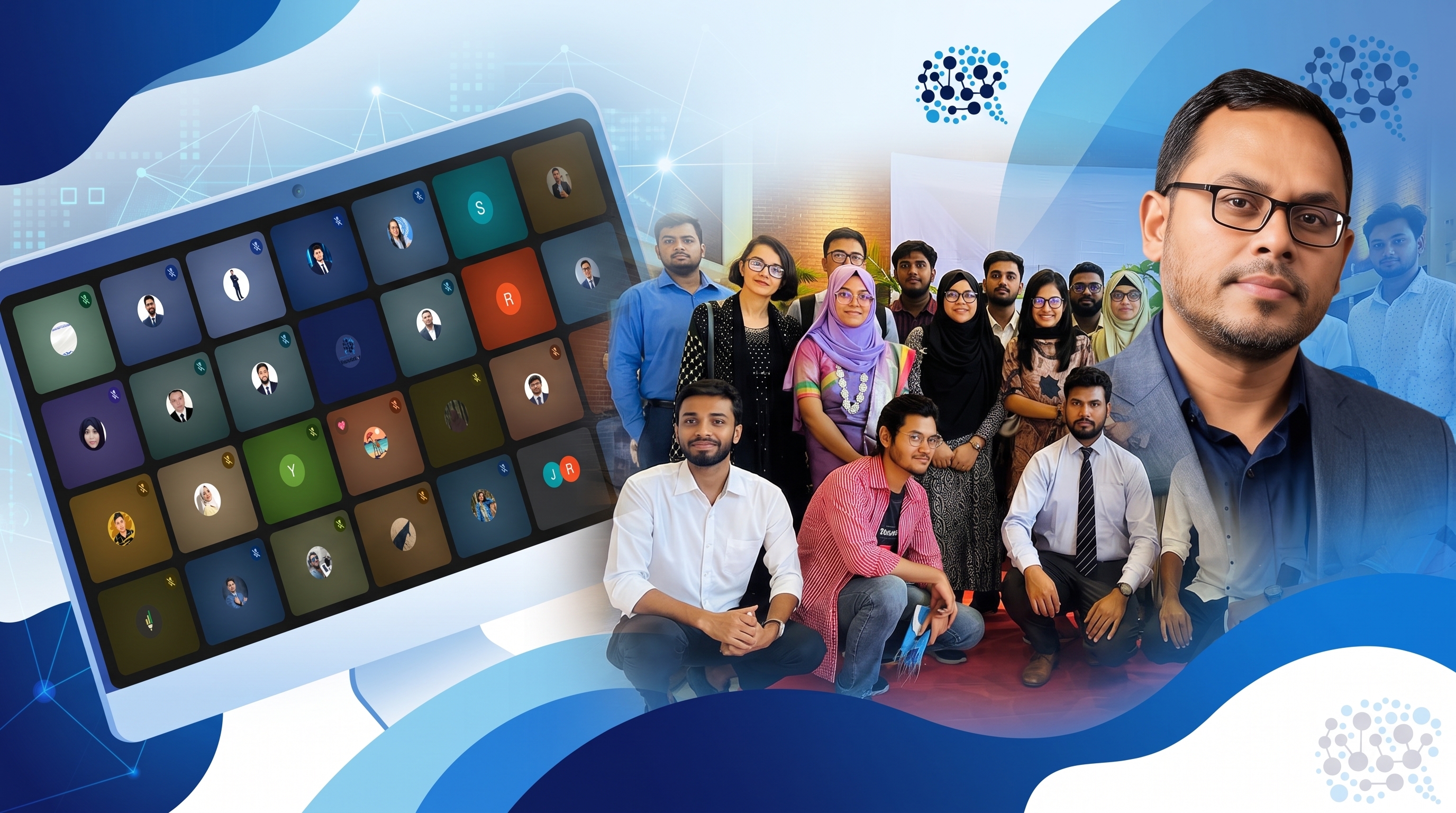
Learning How to Learn in the Age of AI: Notes from Farhana's Brainstation Leadership Fellowship
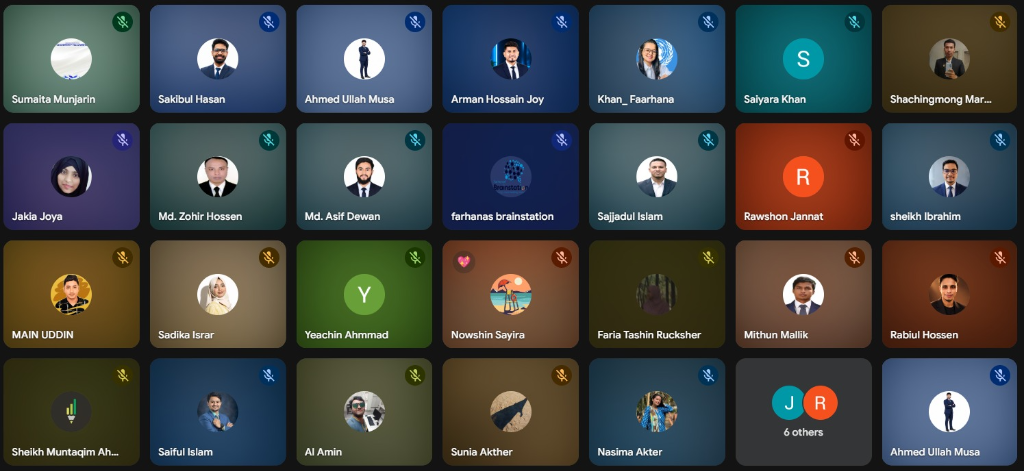
On 14th October, Wednesday, I opened a Google Meet link and found a room full of young people who had already given up their evening, around 50 participants. Nobody was there because an attendance sheet required it. Farhana's Brainstation had promised them something worth an hour, and they had come to test it.
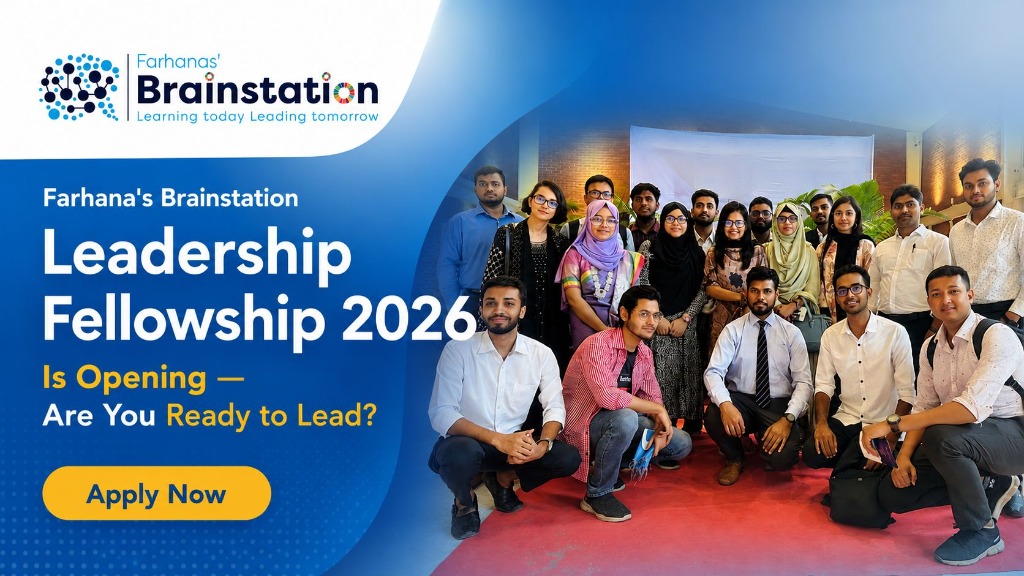
Cohort 13 of the Farhana's Brainstation Leadership Fellowship selects one hundred young people each cycle to work on live SDG-focused projects for six months, building leadership by doing actual work with actual teams. My job for the evening was one session: Learning: How to Learn in the Age of AI.
I opened with two questions. How many of you are uncertain about your career and your future? How many worry that what you learned at university is not enough to land a good job? Hands went up across the room, both times.
Their worry is justified
This is not a motivation problem; it is structural. Stanford found a 16% relative decline in entry-level employment for ages 22–25 in the most AI-exposed jobs since 2022. The World Economic Forum expects 39% of workers' core skills to change by 2030. And Microsoft and LinkedIn report that 71% of leaders would hire a less-experienced candidate with AI skills over a more-experienced one without.
The routine first job — the on-ramp to a career — is the part being automated. What went up in value is the person who can check the machine's work.
What the room told me before I taught anything
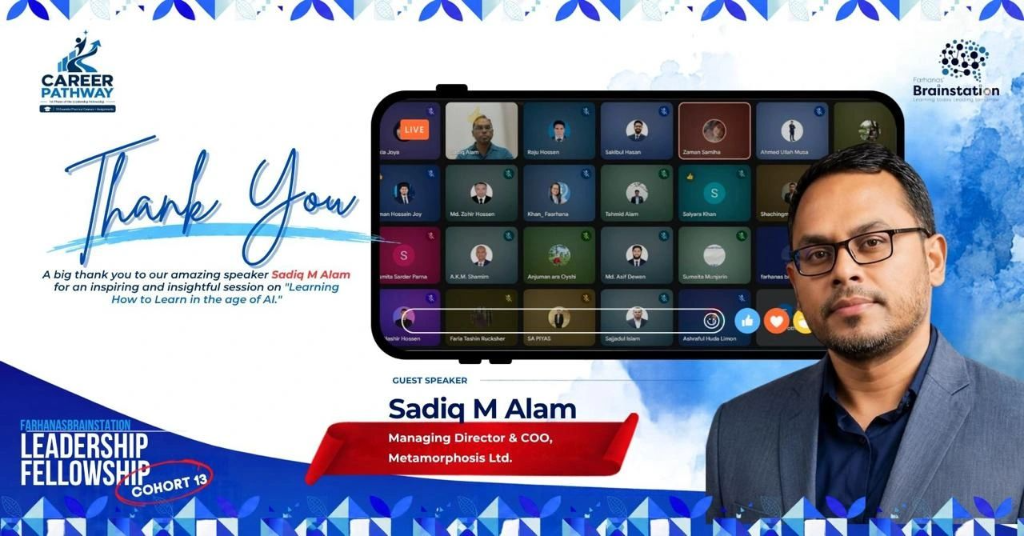
I did not want to guess at this audience, so I surveyed them live. Of the fifty-plus present, the fellows responded — a self-selected slice, so read these percentages as directional.
- Who was there: 45.8% undergraduates (mostly third and fourth year), 29.2% graduates yet to find work, 20.8% employed, 4.2% running a business. Three in four were students or unemployed graduates; the median age band was 21–26.
- What they are aiming at: Business/Commerce 66.7%, Technology/Software 41.7%, Humanities and the creative sector 37.5% — most picking more than one. They are hedging, not narrowing. With 84.6% using an AI tool daily but only a third using it for coding or data analysis, hedging is rational: they can see the tools but not yet the craft.
- What actually worries them: I expected AI displacement to top the list. It finished near the bottom at 12.5%. The dominant concerns were keeping skills relevant (62.5%) and lacking practical experience (56.2%). Yet asked directly about AI's effect on their own careers, 85.7% admitted concern and 0% were purely optimistic. They are not afraid of AI in the abstract; they are afraid of being unable to prove they can use it — a far more solvable problem.
Two numbers stayed with me: 76% were dissatisfied with their current career scenario, while 88.9% were excited about building a career and 41.7% already claimed a specific goal and plan. High dissatisfaction, high optimism, and a plan not yet executable. That is not confusion. It is capability debt.
What I actually taught
The session ran on one idea: in an AI world, understanding beats information. Information is what the model hands you. Understanding is what lets you decide whether to trust it.
From there we covered how the generalist returns to value — not someone who knows a little of everything, but someone who can connect disciplines. I used teenage social-media addiction and Dhaka's traffic to show that neither problem is solvable from inside a single department, then gave the practical version: build T-shaped knowledge, spend roughly 70% of your learning time on your core and 30% on adjacent fields.
I also showed them that the best learning infrastructure of their lives is already free — YouTube to watch knowledge in action, Coursera and MIT OpenCourseWare for structure, X as a curated hub. Equal time went to AI's limits: a confident answer can be wrong, a citation can be invented, an answer can be biased.
Then the ten prompts that turn AI from an answer machine into a tutor — Socratic questioning, explain-like-I'm-five, the Feynman teach-back, analogy mapping, worked examples, active recall, spaced practice, examples versus non-examples, mixed practice, and transfer. Plus a five-step method they could repeat without me: Define, Attempt, Study, Practise, Recall.
How they responded
We closed with the exercise I care about most: Learn It → Close AI → Prove It. Work a small skill with AI helping. Close the tab. Then do it alone. The gap between those two performances is the only honest measure of what you have learned.
The questions were the tell. Fellows asked how to choose a direction when every path looks viable, whether degrees still signal anything, and how to build a portfolio when nobody will give you a first project. Several stayed back to ask how to apply the loop to skills they had quietly abandoned.
For their careers I left three shapes to aim at:
- The Builder who designs and operates AI systems.
- The Orchestrator who owns a process and its human and digital workers.
- The Trust Pro whose value is defensible judgment.
Different pay, different temperaments, one shared currency: verified judgment. And a 90-day start — map one real process, automate one step and measure the before and after, then own one named outcome and teach a colleague to hold it.
Farhana's team was generous afterwards:
"Behind every meaningful learning experience, there is someone willing to share their knowledge and inspire others to grow… The session reminded us that learning is not just about gaining knowledge; it is also about knowing how to adapt, ask better questions, and use new technologies responsibly."
And one fellow put the thesis better than my closing slide did:
"In the age of AI, learning is no longer a destination, it's a lifelong journey of reinvention."
What I took away
I have run AI programmes for enterprises with bigger budgets. What struck me about Cohort 13 was the honesty of the starting position. They are not asking to be inspired; they are asking to be equipped — and they already know the most useful thing anyone can hand them is not a fact, but a method for acquiring the next one.
If that is the raw material Farhana's Brainstation is working with, their next six months are worth watching.
If you run a fellowship, university programme, or corporate team that needs this session — or a fuller AI-readiness programme built on your own data — write to me at hello@sadiqalam.com
Survey note: figures come from two in-session surveys (50+ attendees). Participants were self-selected, not randomly sampled, and per-question bases vary; each percentage is reported on the base that answered that question.
Интересуетесь подобными мероприятиями?
Свяжитесь с нами, чтобы пригласить Садика М. Алама на ваше следующее мероприятие или обсудить потенциальное сотрудничество.
Свяжитесь с нами