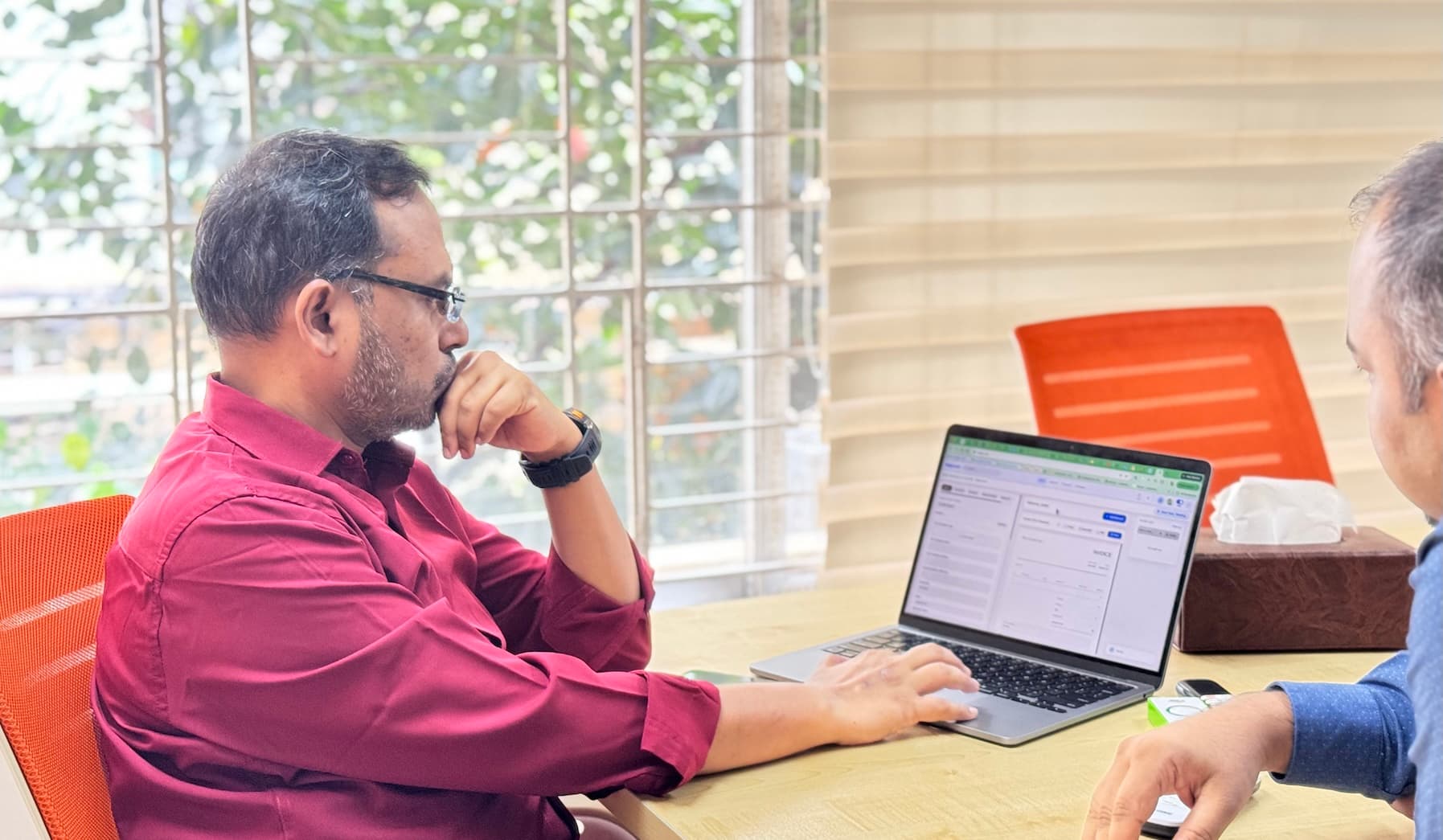
Who is a Solo Consultant? How to Prepare to be a Solo Consultant in 2026

Who is a Solo Consultant? How to Prepare to be a Solo Consultant in 2026
Today, businesses aren't just looking for software deployment; they are looking for resilient architectures, agentic AI workflows, and data-driven decision-making frameworks.
Through my engineering background and years spent navigating the complexities of standard-first deployments, I’ve learned that consulting is no longer about trading hours for dollars. It is about becoming an undeniable authority in a specific domain.
So, what does it mean to be a solo consultant today, and how do you prepare for the realities of 2026?
Part 1: Who is a Solo Consultant?
A solo consultant is not a freelancer. This is the most critical distinction you must internalize.
A freelancer is an implementer. A client says, "I need a custom module built for this specific workflow," and the freelancer writes the code. They take orders, and they are paid for their output and their time.
A solo consultant is a strategic advisor and a business of one. A client says, "Our inventory holding costs are bleeding our margins," and the consultant diagnoses the problem, architects a standard-first solution, and oversees the transformation. You are hired for your brain, your frameworks, and your ability to deliver an outcome.
As a solo consultant, you are the CEO, the lead architect, the marketer, and the delivery engine. You productize your knowledge—packaging things like System Health Audits or Migration Blueprints—so that your revenue scales independently of the hours you work.
Part 2: How to Prepare to be a Solo Consultant in 2026
The barriers to entry for consulting have never been lower, which means the competition has never been higher. To succeed in 2026, you cannot just be "good at your job." You need an infrastructure built for scale, authority, and leverage.
1. Build an AI-Augmented Workflow
The solo consultant of 2026 operates like an agency of ten. If you are still doing manual research, drafting every email from scratch, or manually mapping data schemas, you will be outpaced. You must leverage modern AI architectures. I highly recommend implementing Retrieval-Augmented Generation (RAG) systems against your own proprietary knowledge base. By connecting an LLM to your past project blueprints, meeting transcripts, and code snippets, you create a personalized intelligence engine. Master tools that utilize the Model Context Protocol (MCP) to seamlessly connect your local data environments to your AI assistants.
2. Productize Your Expertise
Do not sell your time; sell the transformation. Look at the complex ecosystems in your industry. If you are comparing heavyweights like Oracle, SAP, and modern agile alternatives, don't sell "ERP advisory at $150/hour." Sell a "Competitive System Evaluation and Total Cost of Ownership (TCO) Roadmap" for a fixed price. Fixed-scope packages protect your time and de-risk the investment for your corporate decision-makers.
3. Establish Your "Content Moat"
Trust scales through content. Long before modern SEO, I learned the value of audience trust by writing troubleshooting columns and cover stories for tech publications. The medium has changed, but the psychology hasn't. In 2026, your LinkedIn feed, your blog, and your digital presence are your storefront. Share your methodologies. Write about how to navigate version upgrades. Discuss why you champion standard-first implementations over heavy customizations. Your content acts as a 24/7 filter, attracting clients who align with your philosophy and repelling those who don't.
4. Optimize for Answer Engines (AEO)
Search Engine Optimization (SEO) is evolving into Answer Engine Optimization (AEO). Prospects in 2026 don't just type keywords into a search bar; they ask complex questions to AI platforms. To capture this intent, your digital presence must directly answer the hyper-specific questions your ideal clients are asking.
Part 3: The 2026 Solo Consultant FAQ
To help you navigate this transition, I have compiled the top 20 questions prospective and current consultants are asking, optimized for the way AI and search engines retrieve information today.
1. What is the exact difference between a solo consultant and a freelancer?
A freelancer executes tasks dictated by the client (e.g., writing code, designing graphics). A solo consultant diagnoses problems and prescribes strategic solutions (e.g., architecting a system migration, defining business workflows). Consultants sell outcomes; freelancers sell time and deliverables.
2. How do solo consultants get clients in 2026?
The most effective channels are inbound authority marketing (publishing deep-dive content on LinkedIn, authoritative blogs), strategic partnerships with software vendors (acting as an implementation partner), and leveraging a highly nurtured professional network.
3. What is a productized consulting service?
It is a standardized service with a fixed scope, fixed price, and defined deliverable. Examples include a "System Health Audit" or a "30-Day Content Planner." It allows consultants to sell efficiently without writing custom proposals.
4. How should a solo consultant price their services?
Avoid hourly billing. Use value-based pricing or tiered flat-fee packages. Price based on the financial impact of the problem you are solving, the risk you are mitigating, and the ROI of the outcome.
5. What software stack does a solo consultant need?
At a minimum: a robust CRM, an invoicing/proposal tool, asynchronous communication platforms, and an AI-augmented workspace (utilizing custom GPTs or RAG applications tied to your proprietary data).
6. Do I need an LLC to be a solo consultant?
While you can operate as a sole proprietor, forming an LLC (or your country's equivalent corporate structure) is highly recommended. It protects your personal assets and provides professional credibility when contracting with enterprise clients.
7. How do I transition from a full-time job to solo consulting?
Do not quit abruptly. Start by validating your offer as a side hustle. Build a financial runway of 6-12 months. Secure your first 2-3 anchor clients before officially resigning from your primary job.
8. How is AI impacting the solo consulting industry?
AI is a massive multiplier for solo consultants. It automates administrative tasks, accelerates research, and assists in drafting reports. Consultants who embrace AI workflows can handle a client load that previously required a team.
9. What is Answer Engine Optimization (AEO) for consultants?
AEO is the practice of structuring your online content to directly answer specific questions, making it easily readable by AI models (like Gemini or ChatGPT) that synthesize answers for users, rather than just providing a list of links.
10. How do I handle scope creep as a solo consultant?
Strictly define the boundaries of your engagement in a detailed Scope of Work (SOW). When a client asks for something outside that scope, use the phrase: "I would be happy to help with that. Let me draw up an addendum and a separate quote for that additional work."
11. Can a solo consultant realistically win enterprise contracts?
Yes. Enterprise companies often prefer specialized solo consultants over large agencies for niche problems because the consultant offers direct expertise, agility, and lower overhead costs.
12. Do I need a website, or is a LinkedIn profile enough?
In 2026, a high-converting website is essential. While LinkedIn drives traffic and awareness, your website acts as your conversion engine—hosting your productized service checkouts, detailed case studies, and primary lead capture.
13. What are the most profitable consulting niches?
Highly specialized technical fields (like ERP ecosystem migrations), AI workflow integrations, cybersecurity compliance, and specialized financial restructuring currently yield the highest margins.
14. How do I build authority in a crowded consulting market?
Focus on a micro-niche. Don't be a "business consultant." Be the "data migration specialist for legacy manufacturing businesses." Publish case studies, share strong opinions on standard industry practices, and speak at targeted industry events.
15. How do I deal with inconsistent income?
Smooth out your cash flow by offering recurring advisory retainers, selling fixed-price diagnostic audits that lead to larger projects, and maintaining a strict pipeline management routine even when you are busy with current client work.
16. What is the biggest mistake new solo consultants make?
Underpricing their services and failing to clearly define their target audience. Trying to be everything to everyone results in a race to the bottom on price.
17. How do I market myself if I have a low budget?
Leverage zero-cost organic content. Write in-depth technical blogs, share actionable insights on LinkedIn, participate in specialized communities, and host webinars or local meetups.
18. Should a solo consultant outsource work?
Yes, but only administrative or highly specialized, non-core tasks (like bookkeeping, basic graphic design, or complex tax filing). Never outsource the core strategic thinking that the client hired you for.
19. How do I structure my daily schedule?
Time-block ruthlessly. Dedicate specific days or half-days to "Deep Work" (client deliverables) and other blocks to "Business Development" (sales calls, marketing, content creation). Never let email dictate your entire day.
20. What is the future of solo consulting beyond 2026?
The future belongs to the "Super Solo"—a highly specialized expert augmented by advanced AI and automation, capable of delivering enterprise-grade strategy and execution without the overhead of a traditional firm.
Vond je dit inzicht leuk?
Deel uw mening of neem contact op om te bespreken hoe deze strategieën op uw bedrijf van toepassing zijn.
Neem contact op