Does Your Business Really Need an ERP? Odoo, AI and Business Automation, Explained
I have spent close to 20 years in software and IT, and roughly 10 of those working on ERP. In that time, the question I have heard most often in client meetings is this: "Do we actually need an ERP — and if we do, what will it cost?"
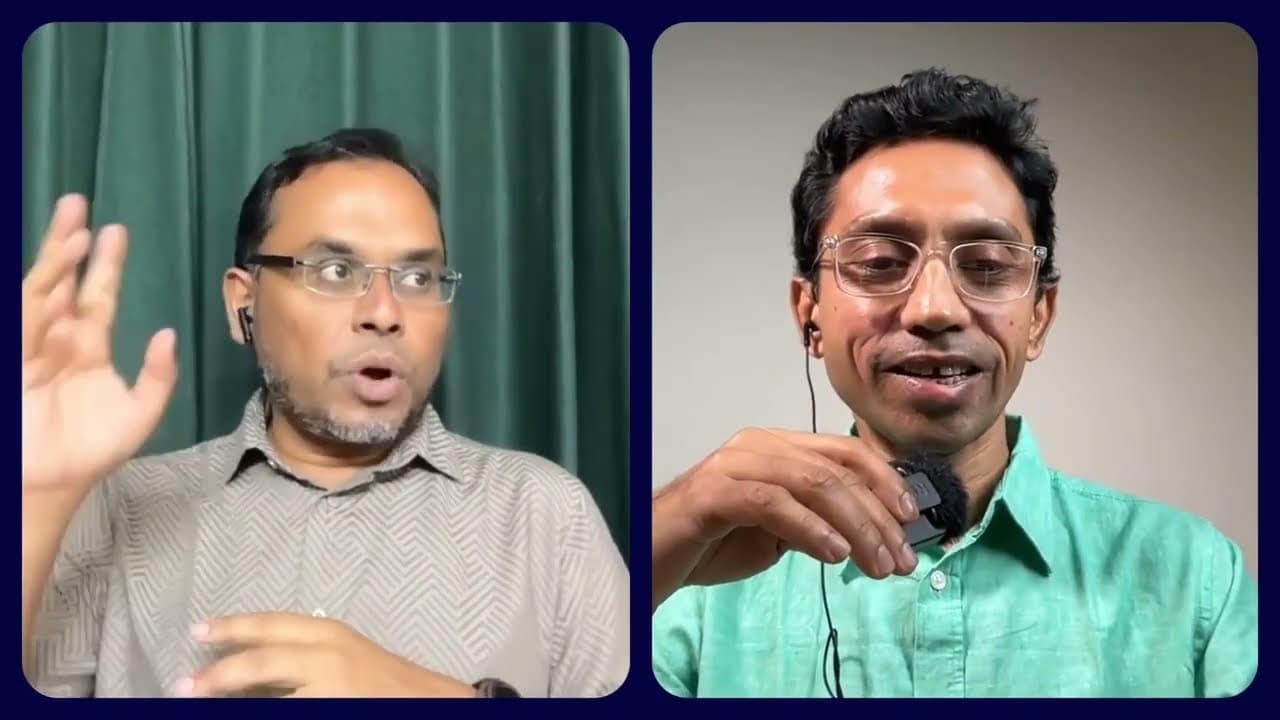
I finally had the chance to answer that properly in one sitting on the Sadiq M. Alam Podcast, in a candid 63-minute conversation with host Samsuzzaman Riton. We covered where I came from (BUET, National University of Singapore, leaving a PhD at UCLA to come home), how I started my first company in 2011, and how Metamorphosis Ltd. has been implementing Odoo in Bangladesh and abroad since 2017. But the part that matters most to readers was the business conversation: when you should move to an ERP, why roughly half of ERP projects fail, whether AI can really reveal someone's salary, and where the career opportunities are for the next generation.
What follows is a summary of that discussion — and more than a summary. Under each question I have added the practical detail from my own delivery experience, so you can use it to make a decision about your own business.
The 30-Second Answer
- When you need an ERP: when sales, outlets or headcount are growing but efficiency has stopped improving; when the owner is the only person still holding everything together; and when you need real-time data across every branch.
- Why ERP projects fail: close to half of them do not deliver — the main causes are requirement gaps, missing stakeholders, unprepared users and vendor-side weakness, not the software itself.
- What AI changed: reports used to mean hunting through menus; now you ask a question in plain language and the report appears. Work that took four people two months is now done by two people in one month.
- The cost reality: a 50-employee company usually needs about 10 users at roughly USD 13 per user per month; one-time implementation runs from BDT 3–5 lakh up to crores for complex rollouts.
- The results: one FMCG client now closes the month in real time, runs payroll for 200 employees in about three minutes, and cut HR administrative work by 70–80% and accounting/finance work by 60–70%.
- The career angle: consultants, business analysts and programmers are all in demand; skill and attitude decide, not your CGPA or your university's signboard.
What an ERP Actually Is — Explained for a Business Owner
I never start by teaching someone the definition of ERP. I start by asking where the pain is. In practice, most businesses sit in one of three situations:
- No software at all — everything lives in handwritten ledgers.
- Partial software — typically only accounting software (in Bangladesh, often Tally), with everything else manual or in Excel.
- Three or four disconnected legacy systems — accounting in one tool, HR in another, inventory in Excel, so information is entered repeatedly and the numbers never reconcile.
I describe the fix with an umbrella metaphor: put everything under one umbrella and your data becomes integrated, your information becomes real-time, and reporting stops being a project of its own. For owners who have never used software, I do not sell ERP technology at all — I explain business automation and the efficiency gain. In the end, a person wants a comfortable shoe; which factory made it, or which brand it is, matters far less than whether it fits.
A rule of thumb: when a client finds us on their own, they have already identified the problem — those are the most mature leads. For everyone else, you have to talk in the language of the problem (late reports, wrong stock, invisible sales), not the language of the product.
How AI Has Changed ERP: Three Shifts in the Last Three Years
There is a clear before and after ChatGPT. Three changes stand out.
1. Reports in natural language. A large share of ERP training used to be spent teaching people where each report lived. Today a user asks a question — "Who were the top 10 customers of the Dhaka branch last month?" — and the system produces the report. Management ultimately reads reports, so this is the biggest shift of all.
2. Faster implementations. Requirement gathering, gap analysis, customisation and development are all quicker with AI in the loop. Work that took four people two months now takes two people one month.
3. A different kind of development. Programming has become problem-solving; with agentic tooling, one developer now delivers far more. There is a warning buried in that: entry-level roles are shrinking, because one person with AI can do what five used to.
Six Clear Signs Your Business Needs an ERP
There is no formula that says "buy an ERP at 200 employees." But when these signals appear together, it is time to decide:
- Headcount is growing and so are the mistakes — ten people make a certain number of errors; a hundred people make far more.
- Efficiency starts falling at a certain size — bigger teams create more inter-departmental dependencies, while everyone still has only eight hours.
- Revenue hits a plateau — the business has been stuck at the same monthly number (say BDT 30 lakh) for six months.
- The owner is the bottleneck — first in, last out, every day. That model does not survive scale.
- You need real-time branch visibility — the way CCTV gives you eyes on another shop, you want eyes on the data: today's sales by location, what raw material has been sitting in which warehouse, what the sales trend actually looks like.
- Reports take three days — a manager digs through ledgers for three days and still hands you numbers with mistakes. When questions cannot be answered on the spot, that is a signal too.
Why ERP Projects Fail — Problems on Both Sides of the Table
Globally, the success rate of ERP projects sits around 50%, and in the subcontinent — where businesses have a shorter history with software — it is worse. As a vendor, I hold vendors responsible for a good share of that. These are the gaps I see most:
| # | Cause | Whose side | Fix |
|---|---|---|---|
| 1 | Requirements are not articulated properly — the client does not know what they want | Client | Put an experienced business analyst in front of them and ask the right questions; document the exceptional cases too, even the ones that happen twice a year |
| 2 | Not every stakeholder is involved — the person who does the daily work is never in the room | Client | Treat it as an emotional factor, not just a process gap; bring every user in from day one |
| 3 | Users lack readiness, literacy or comfort with a computer | Client | Check tech literacy first, hand over modules second; always budget for a training plan |
| 4 | Trying to build an eight-storey building in one go — every module live on day one | Both | Implement phase by phase and accumulate small wins into a genuine transformation |
| 5 | Sending inexperienced people to gather requirements | Vendor | Send senior, industry-experienced people to discovery — otherwise the snowball effect compounds |
| 6 | Taking on work beyond your capability ("race to the bottom") | Vendor | A BDT 40 lakh project won at BDT 8 lakh gets an BDT 8 lakh team: an engagement that deserved six months now runs to thirteen |
A rule of thumb: ERP success is not primarily a technology problem, it is an alignment problem. When everyone from the owner at the top to the last data-entry user at the bottom is pulling in the same direction, implementations go live remarkably fast — I have seen that happen often.
What Does an Odoo Implementation Cost? The Real Math for a 50-Person Company
Start by breaking one myth: a 50-employee company does not need 50 ERP users. The core functions are Purchasing, Sales, Inventory and Accounting. In practice, three of the four people in accounting get access, two in supply chain, three in sales — and about 10 users run the whole thing.
| Cost item | The figures quoted in the episode |
|---|---|
| Licence (per user) | About USD 13 per user per month; roughly BDT 16,000 per user per year |
| Users in a 50-employee company | Typically around 10 |
| Server / hosting | Varies with the size of the deployment |
| Implementation and customisation (one-time) | From BDT 3–5 lakh for smaller scopes up to crores for large projects |
I often compare that licence cost to an employee's mobile phone bill — except the return is far larger, because the hours a person spent hand-building weekly reports are freed up. In practice we see efficiency gains of 60–70% on those tasks.
Before you budget, verify: Odoo's licence price depends on where you buy (there are roughly a dozen regional price lists across eight currencies), and the Standard and Custom plans differ in what they include. Confirm your own country's rate at odoo.com/pricing before you commit to a number. For reference, one US dollar was about BDT 123 in September 2026.
What It Looks Like After: One FMCG Client, Six Months Later
Here is an anonymised example I use often. The company kept its accounting in a standalone tool, with everything else split between manual registers and Excel.
Before: at month end, accounting, finance and supply chain sat together to produce the closing report, which consumed days. Payroll for roughly 200 employees was assembled by hand — who was late, whose leave balance was what, which policy applied — and reconciling it produced errors.
After: month-end closing is continuously updated in real time; at month end it is one click. Once the report format is configured, it builds itself. Payroll and payslips for 200 employees are generated in about three minutes and emailed to each employee.
The net effect: HR administrative work dropped by 70–80% and accounting/finance work by 60–70%. Leadership got its time back for scaling, customers and strategy.
Does AI Send Your Sensitive ERP Data Outside the Building?
This is the most common question I hear, and the answer is clear: at enterprise level, AI works inside the boundary of your own system. The model only lends its intelligence. Your sales data, salaries and customer records are not shipped to someone else's server for processing — the vector database is built inside your system and the analysis happens there.
Three more points worth remembering:
- Access control through guardrails: each user's data scope is defined in advance. Nobody can ask the AI for the boss's or a colleague's salary. You can check your own leave balance; you cannot check someone else's.
- MCP (Model Context Protocol): Odoo is not locked to a single LLM. ChatGPT and Gemini are supported out of the box, and MCP lets you plug in whichever model you prefer.
- Consumer AI is not enterprise AI: on a normal ChatGPT or Gemini account, the terms can allow your uploaded data to be used for training. In an enterprise integration, that control stays entirely with the owner of the software.
ERP Careers in the AI Era: Three Roles and the Skills They Need
ERP is a domain you can enter from business, accounting, finance or programming. Three kinds of people are needed:
| Role | What they do | Skills required | Best suited to |
|---|---|---|---|
| ERP Consultant | Understand the client's business, design the solution, lead the implementation | Cross-industry experience plus software knowledge | Experienced professionals |
| Business Analyst | Listen to requirements, document them, translate them into software needs | Asking the right questions, writing and communication | Graduates from any background |
| Programmer / Developer | Customisation, integrations, module development | Python, PostgreSQL, framework understanding, AI tooling | CS/programming background (a degree is not mandatory) |
Becoming a business analyst does not require a specific degree — it is a skill set you can acquire. Someone who studied economics, English, or something entirely unrelated can become a strong BA with enough curiosity and speed of learning. Many people in Bangladesh support and build for American companies from here, and the input-to-reward ratio in this niche is better than in generic web or mobile work, because companies invest serious money in ERP.
What I Look For on a CV — and What Gets It Rejected
The bad news for fresh graduates is that our academia does not always match industry needs. So I look elsewhere:
- Self-driven projects or freelance work — it proves the person has already practised delivering on time. Many young people struggle with structure (fixed hours, real deadlines); evidence of prior work lowers that risk.
- Contributions on problem-solving platforms — the people who hunt down problems on their own tend to be the strongest hardcore developers.
- Awareness of AI tooling — if a candidate cannot name the best coding agent right now, that is a red flag for us, because the world is moving fast and staying current is part of the job.
- Communication, attitude and staying power — about 90% of applicants never match a job description fully; we know we will train. So communication, humility and durability matter more.
- Very frequent job changes — switching every six months needs explaining. We invest senior time in knowledge transfer, so that risk is one we avoid.
One more thing, said plainly: do not change your goals because of your CGPA or your university's signboard. The culture of a good institution shapes a person and that matters — but if you prepare yourself properly, your grades will not be the thing that stops you.
From Bangladesh to Global Odoo Delivery: Where the Opportunity Is
Roughly 30% of our clients are international and 70% are Bangladeshi, and revenue splits about 50-50 between the two. We have a team in the Maldives, and have delivered in Malaysia, Japan and several European countries including the Netherlands.
ERP is difficult to run purely remotely, because proximity improves service — so where you can place a representative on the ground, that is the best model. North America is crowded and competitive; Europe and other markets look more promising for us. If Bangladesh wants to become a serious global Odoo delivery nation, two things matter: educating the market (where the roughly 10–15 Odoo partners here have a big role to play) and taking Odoo into universities, using Odoo's own education programme, which gives students free access and a two-year licence.
My Three-Level Advice
1) Strategic view: by 2026–27, smart software is no longer a luxury, it is table stakes. Automation is the price of staying competitive; those who delay will later be running twice as fast at twice the cost. History offers one simple example — after computers arrived, no one could imagine a corporate office or a shop without one. AI-capable software is heading for exactly that normality.
2) How to think about it: stop treating ERP as an IT project. It is a business transformation project. Once you have taken the lift, you do not climb six floors on foot; a business that tastes that convenience will not go back to manual work either. So your first question is not "which software," it is "what information do I need instantly in my business" — and finding that answer is the owner's job, not only the IT team's.
3) Practical application: start small. Go live with accounting, sales, purchasing and inventory, then add HR, manufacturing and dashboards. Phase by phase, each success compounds; trying to switch everything on at once keeps everyone busy at the same time and stalls the project.
Frequently Asked Questions
How do I know whether my business actually needs an ERP? The clearest signals: sales, outlets or headcount are growing while efficiency falls; the same data is being written in two or three places; and the owner can no longer hold everything together or revenue has plateaued. If you need real-time data from every branch as well, it is time.
How much does an Odoo implementation cost? In the episode: about 10 users for a 50-employee company at roughly USD 13 per user per month (about BDT 16,000 per user per year), plus one-time customisation and implementation from BDT 3–5 lakh up to crores. Because Odoo prices regionally, verify your own rate at Odoo's official pricing page.
Why do ERP projects fail? Requirements that never get articulated, stakeholders left out of the process, users who are not ready, and vendor-side weakness — inexperienced discovery, taking work beyond your capacity, and winning on price alone. Phase-by-phase implementation and top-to-bottom alignment are what actually de-risk a project.
Does AI send confidential and salary data outside the company? Not in an enterprise deployment — the data stays inside your system's boundary and guardrails define who can see what. An employee can view their own leave, not someone else's salary. Consumer accounts on ChatGPT or Gemini offer far less control, so do not confuse the two.
What should I learn to start an ERP career? By role: Consultant — cross-industry business understanding plus Odoo functional knowledge; Business Analyst — requirement gathering, documentation and communication (open to any background); Developer — Python, PostgreSQL and AI-assisted tooling. Start with Odoo Community and build small projects of your own.
Will entry-level jobs still exist in the AI era? Fewer of them, and more competition. The survivors are generalists — people who combine programming with business sense, communication, the ability to ask good questions and current knowledge of AI models. That combination is your best defence over the next five years.
The Bottom Line
The biggest lesson from that conversation is a simple one: ERP success does not depend on technology, it depends on people — on the honesty to state requirements properly, on involving every stakeholder, and on the patience to go phase by phase.
If you run a business, at least open Odoo in 2026–27; you can start small rather than waiting for a big contract. If you are a student or considering a career change, this ecosystem is still comparatively uncrowded, and now is the time to learn. Tell me where automation could help your business, or which skill you would start with, and I will try to answer.
Related reading: What is Odoo ERP? · Why Odoo ERP is the best fit for Bangladeshi businesses · How to choose an ERP consultant in 2026
Sources: the podcast episode on YouTube · Odoo official pricing · Regional price-list analysis (August 2026)
About the author
Sadiq M. Alam is a Certified Odoo ERP Functional Consultant and Co-Founder & Managing Director of Metamorphosis Ltd. He holds a B.Sc. in Mechanical Engineering from BUET and a Master of Engineering from the National University of Singapore, and was a research fellow in the PhD programme at UCLA. Since 2017 he has advised companies in Bangladesh and abroad on Odoo implementations, digital transformation and enterprise-grade AI adoption.
Would you like to know whether Odoo or AI automation makes sense for your business? Get in touch for a free consultation.
Vond je dit inzicht leuk?
Deel uw mening of neem contact op om te bespreken hoe deze strategieën op uw bedrijf van toepassing zijn.
Neem contact op