AI에 요약 요청하기
세부 정보를 조회할 AI 모델을 선택하세요
연구와 성찰을 통해 신앙, 지성, 현대 생활의 교차점을 탐구합니다.
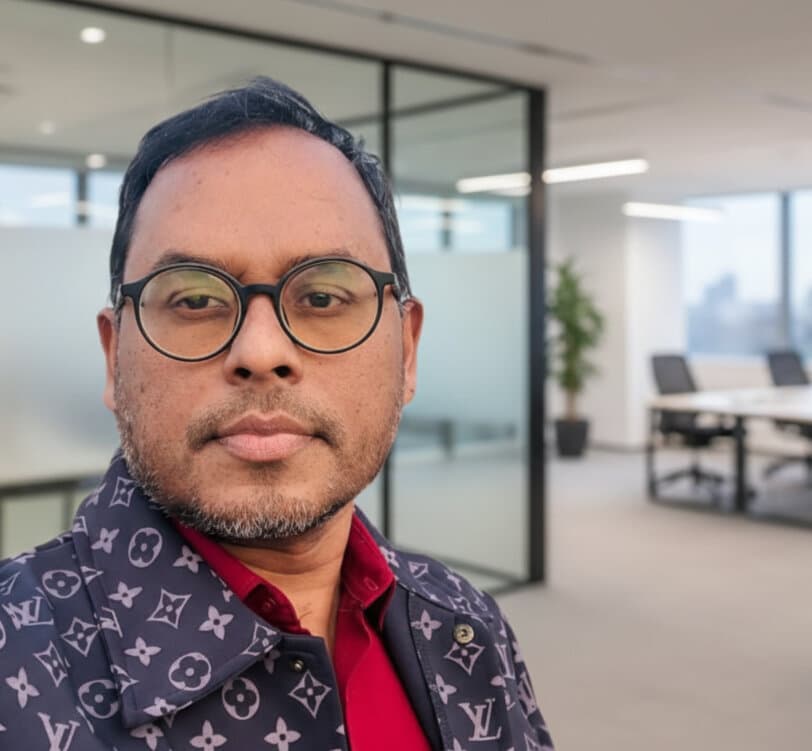
My interest in “truth” has always been there.
I was lucky to have been exposed to study of world religions, credit to my father who was a Professor of History of Art and did his PhD from Banaras Hindu University. His subject being Medieval Art of India, which was largely inspired by diverse religious schools and religion of rulers of that time, my home was filled with books on Hinduism, Jainism, Yoga, Veda, Buddhism, Sufism, Tibetan Religion, Tantra and other ancient religious and spiritual knowledge of India.
This probably instilled a sense that “truth” can be found in all religion and all spiritual paths. I got interested in the study of comparative religion from my teens. I started to study and learn about almost all religions of the world, their primary text. This include both Semitic religion as well as Easter religions.
After this phase, my interest took me more towards the spiritual teachings of all world religions and I began to explore the inner essence of all religion. This included Sufism of Islam, Vedantic Philosophy of Hinduism, Kabbalah of Judaism. Mysticism is something that attracted me quite a lot. Ultimately I became interested to dive deep into the mystical tradition of Islam known as Sufism.
Later I came to know that my forefathers from six generations earlier were Sufi Muslim who were responsible for spreading the religion of Islam in the area now part of Bihar, India. One of my ancestors by the name Shah Sufi Sharmast by whose name and influence a city is called Sarmastpur.
My interest in Sufism unconsciously probably was influenced by my late grandfather from my mother side. He was a Sufi initiated into a Sufi Order and my earliest memory of him was his late night sufi remembrance practice (zikr). He passed away when I was very young, but my few childhood memory include his zikr and his extra ordinary devotion when it came to prayer and to be connected with God.
My study of Sufism was cemented by few prominent characters such as Hazrat Inayat Khan (1882-1927), a Chishti Sufi from India and who is credited to be the pioneer of the transmission of Sufism to the West. He was a prolific writer and his universal outlook around Sufi teachers really resonated with me.
This led to seek Sufi teacher of my own. During mid 2000, I was exploring a number of contemporary Sufi Teachers and their teachings, most of whom were based in the West. My religious and spiritual exploration mostly is limited to English language hence Sufis from the West who writes and speaks in English were naturally on my reading and listening list.
Other Sufi teachers whom I benefitted greatly from in terms of reading and listening or watching then are Shaykh Llewellyn Vaughan-Lee, Shaykh Kabir Helminsky, Hazrat Bawa Muhaiyadeen, Shaikha Fariha Jerrahi.
Then my trip to the USA for the sake of my PhD (which I eventually dropped out of) took me to physically meet Shaykh Llewellyn Vaughan-Lee from Golden Sufi at Berkley, USA. I also had the pleasure of meeting Shaykh Hisham Kabbani among others.
Then by the grace of God, I met my Shaykh with whom I got officially initiated into Sufi Order back in 2008-2009. He has returned to his Lord already. His name was Shakyh Muhammad al-Jamal. He was primarily a Shaykh of Shadhdhiliyya Tariqa, a Tariqa I never heard of until I met him and his students. Apparently Shadhdhiliiya tariqa flourished mostly in North Africa in the region of Algeria and Morocco and later spread towards Palestine, Syria, Jordan and some parts of Africa as well.
I also had the honor to be in the presence of Shaykh Nooruddeen Durkee, who was a friend of Shakyh Muhammad al-Jamal. Shaykh Nooruddeen Durkee and his Zawiya (Center) is where I spent some good time in the USA.
I have both my admiration for Sufism as well as my criticism of it.
During my brief stay in the USA for around one and half years and later about six months in the UK, I was lucky to visit a number of Sufi Communities as well spiritual friends from other paths including the community of Sri Yoganada, Osho followers, Jewish friends and Hare Krishna Movement.
We all are travellers and our path doesn't necessarily remain the same. Our journey has its unique evolution. Mine is no different.
My journey into the world of religion and spirituality later took me in the subject of Islamic Eschatology for which I consider Shaykh Imran Nazar Hossain my teacher. He also is an expert of the International Monetary System and could explain combining the deep knowledge of religious ideas and how the modern world works.
My journey from Comparative Religion to Mysticism and to Sufism to Eschatology has eventually made me interested in deep dive into the study of the Quran. For this I took a different approach than how it's done traditionally. I employed a methodology of system meaning and studying the Quran by the Quran. This excludes any third-party, unverified sources when it comes to the reading of the text.
This led me to establish a virtual institution dedicated to the research of the Quran called, The Institute for Quranic Research and Application (The IQRA). From this institution we are constantly engaged in doing research and publication on the primary subjects of the Quran and have produced close to 15 Books employing system meaning and first principle method in the study of the Quran. All the works from The IQRA are non-profit and are open to the internet for anyone to access from anywhere.
나의 영적 여정의 중심이 되는 주제와 주제들.
비교의 관점에서 전 세계의 모든 종교를 탐구함
종교적 전통의 가장 깊은 철학적 토대를 조사함
이슬람의 영적 차원으로, 최고의 지식은 하나님의 명지(gnosis)이다
제1원리 프레임워크를 바탕으로 새로운 시각에서 코란을 연구함
영성은 현실로부터의 도피가 아니라 현실에 더 깊고 자비롭게 참여하는 방법입니다.
신앙의 깊이와 개인적 발전을 탐구합니다.
다양한 신앙 간의 이해와 조화를 증진합니다.
시대를 초월한 영적 원리를 현대 생활에 적용합니다.
아래 양식을 작성하여 우리가 적합한지 확인하세요.