Beyond ERP: Why Odoo is the Final Operating System of Your Business
Beyond ERP: Why Odoo is the Final Operating System of Your Business
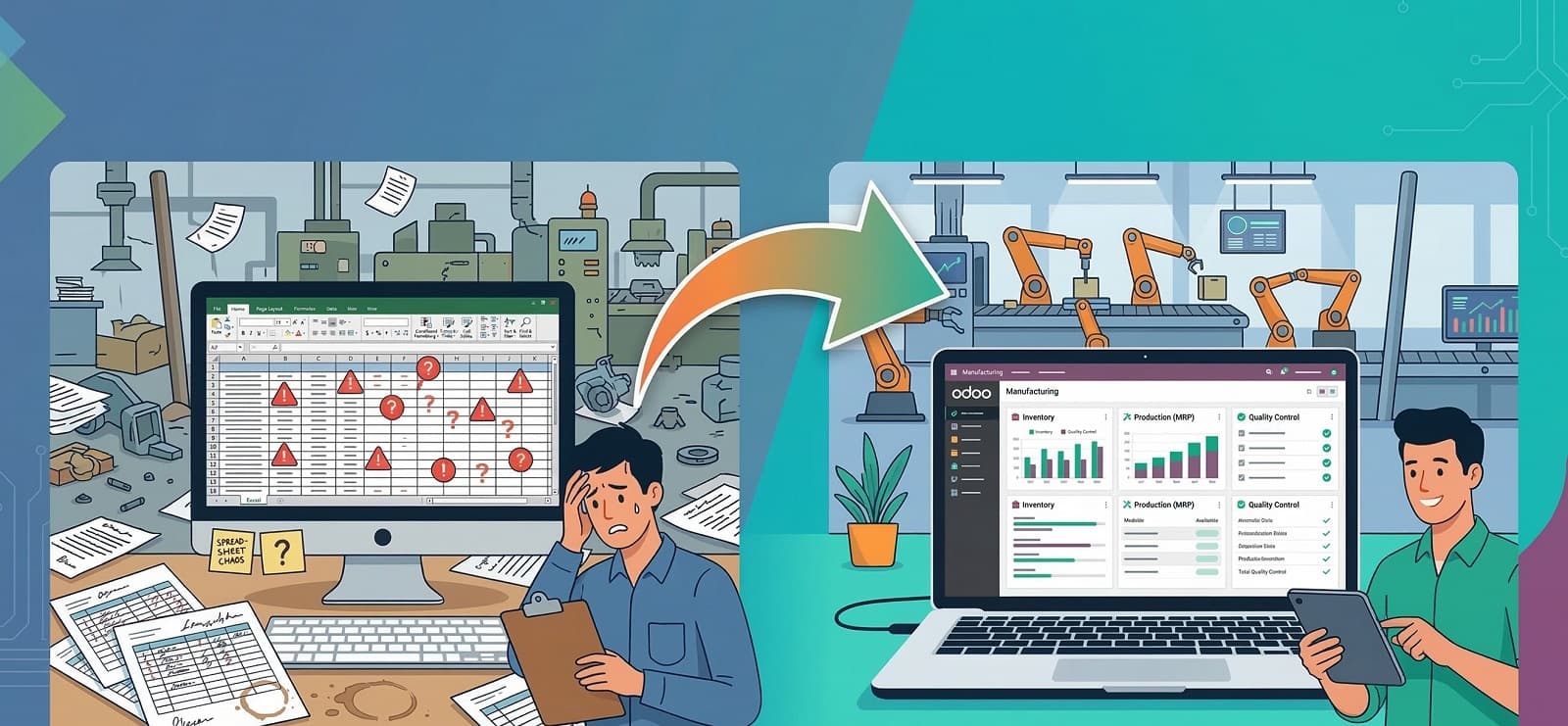
It was a time when being in business meant that you had to switch between a dozen different software subscriptions. You have a CRM to your sales team, another tool to do email marketing, and a creaking legacy system to do accounting, and a spreadsheet that is held together with duct tape and praying about the inventory. It is the standard "Frankenstein" technology stack. Penetrate the ERP (Enterprise Resource Planning) software.
The traditional ERPs promised to resolve this mess through the unification of all things under a single roof. However, being completely frank, the traditional ERPs can be stiff, daunting, and astronomically costly to deploy. However, what is even more important, should we not be thinking of business software as a static tool or a heavy-weight ERP? What was happening instead is that your business now has an Operating System? That is what Odoo has become.
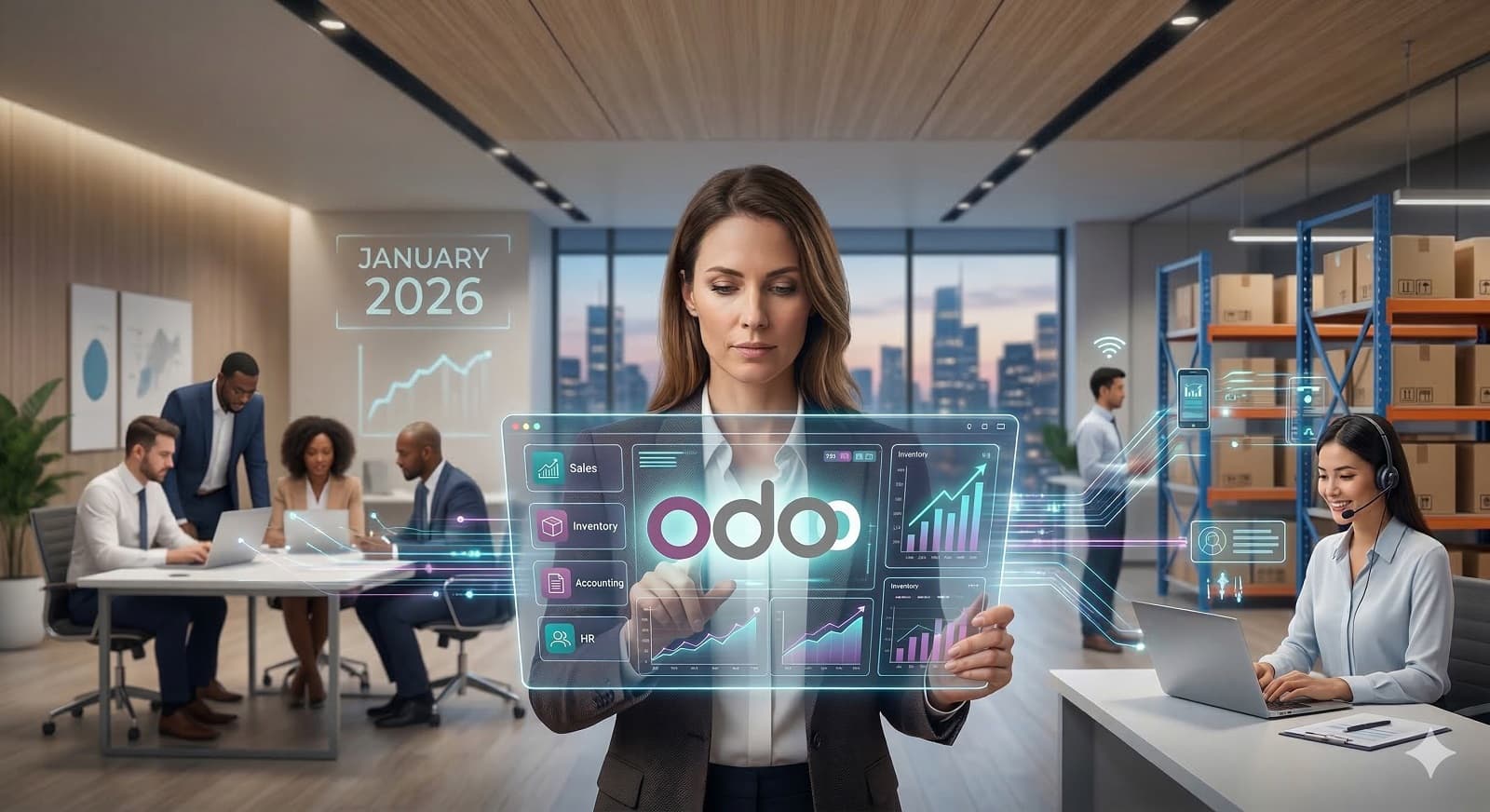
The platform has ceased to be an ERP especially with the tremendous strides that have been taken in recent releases such as Odoo 19. It is a dynamic and fully integrated Operating System (OS). That is why this difference is important and how it can revolutionize how you work.
The Anatomy of a Business Operating System
Take a moment to consider the operating system of your smartphone. You do not purchase phone software, but a well-knit ecosystem in which your camera communicates with your messaging app, your calendar integrates with your email, and the interface is so intuitive. That is what a Business OS will do to your company. It ought to be the base level that ties together all the departments, automates the menial, and expands with ease as your own business grows. How Odoo Does Not fit the ERP Tag How Odoo leaves the traditional ERP tagging behind and enters into the realm of a real Business OS.
1. App Store Modularity
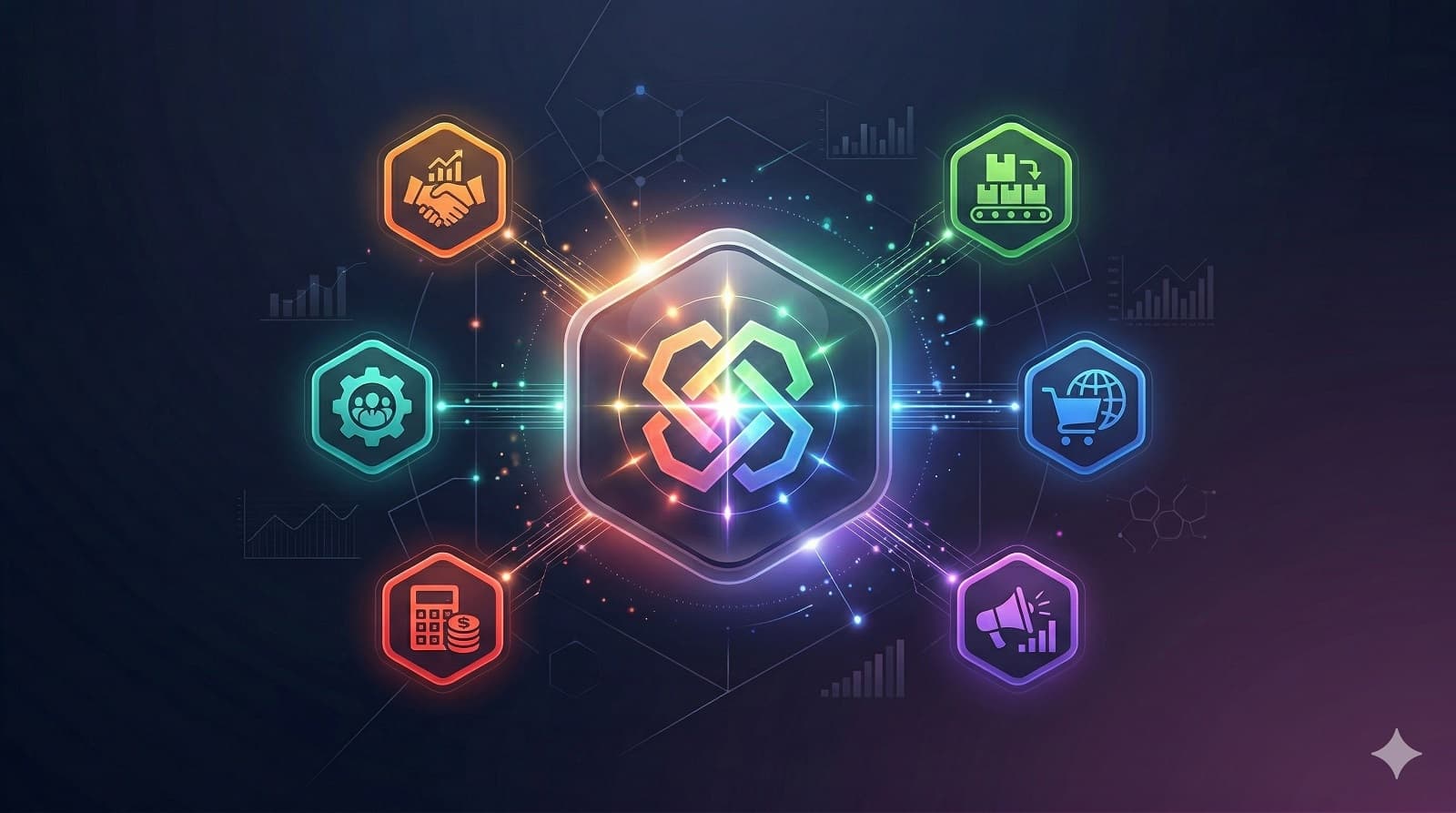
Unlike old-school ERPs, where you have to install it into a giant system that requires years to finish, Odoo works like an app store to your business. You have to mend your accounts first? Install Accounting. You are about to open an e-commerce front in a quarter. Include the Website and the eCommerce applications. Little costs to be added to the Website and the eCommerce applications. Odoo is built on a modular architecture, which allows starting small, fixing the most urgent bottlenecks now, and scaling your tech stack exactly as fast as your business needs.
2. The End of Data Silos (One Source of Truth)
Your sales team does not know what the warehouse is working on, and accounting is always running behind in a disorganized software environment. Due to its central OS nature, all 40+ Odoo native applications use one single database. When a salesperson makes a sale in Odoo CRM Inventory application will reserve the stock immediately, Manufacturing will schedule the production when necessary, and Accounting will draft the invoice. No third-party APIs to maintain, no thin-easy Zapier connections to shatter, and no manual data entry whatsoever.
3. Intelligent that is Intelligible, or Built-In Agentic AI as Your Co-Pilot
Artificial intelligence in Odoo is not merely a chatbot tacked on. Odoo has taken on board Agentic AI as a direct part of the workflow. This implies that the system is not waiting to be clicked on by you but it knows what you need. It is able to make sales predictions with a precision of a miracle, anticipate inventory nights before it occurs as well as automate manual processes such as lead routing and expense classification. It is an OS that has got an example of working on your behalf even when you are asleep.
4. A Consumer-Grade User Experience
The thing about it is that most of the time, traditional corporate software is ugly and it can even take weeks to train users on how to use a single menu. Odoo reverses this script with clean, intuitive and modern interface. The learning curve is exceptionally flat whether your group is scanning inventory on the mobile phone in the warehouse or if it is producing financial reports in the boardroom. You can use Odoo.
5. Open-Source Freedom (No Vendor Lock-In)
An operating system is supposed to be controllable. Due to the fact that Odoo is based on an open-source platform, you are not held at the mercy of closed data formats or features that are only unlocked at a price. You own your data. Whatever you use the Community edition, the full-fledged Enterprise edition, or just choose to host it on your own servers or on the cloud, Odoo lets you choose the flow that best fits your business and is not something the corporate giants excel at.
The Real-World Impact: A Seamless Flow
Imagine this scenario running on the Odoo OS:
-
A customer visits your website (built natively on Odoo) and adds an item to their cart but leaves.
-
Odoo’s Marketing app automatically sends a tailored abandoned cart email.
-
The customer returns and completes the purchase from their phone.
-
Odoo processes the payment, triggers the Inventory app to pack the order, and updates your financial ledger in real-time.
-
The system notices inventory is dropping below a safe threshold and automatically drafts a Purchase Order for your supplier to restock.
Zero human data entry. Zero friction. Just business, flowing exactly as it should.
The Bottom Line
Calling Odoo an "ERP" is like calling a smartphone a "calculator." Sure, it does the math, but its real value lies in how it connects you to the entire world. By adopting Odoo, you aren’t just upgrading your software—you are installing a central, intelligent, and scalable Operating System that empowers your team, delights your customers, and future-proofs your business.
Calling Odoo an ERP Software is like calling a smartphone a calculator. It does the math, but its real power is how it connects your entire world. Stop fighting your software. Upgrade to a Business Operating System today. Upgrade to Odoo.
क्या आपको यह अंतर्दृष्टि पसंद आयी?
ये रणनीतियाँ आपके व्यवसाय पर कैसे लागू होती हैं, इस पर चर्चा करने के लिए अपने विचार साझा करें या संपर्क करें।
संपर्क करें