Building Future-Ready Bankers: Reflections from a Two-Day Training with City Bank
Every era of banking has had its defining technology. The ATM replaced the teller window. Internet banking closed the branches. Now, artificial intelligence is doing something different — it's not replacing one job at a time, it's reshaping how the entire institution thinks about work.
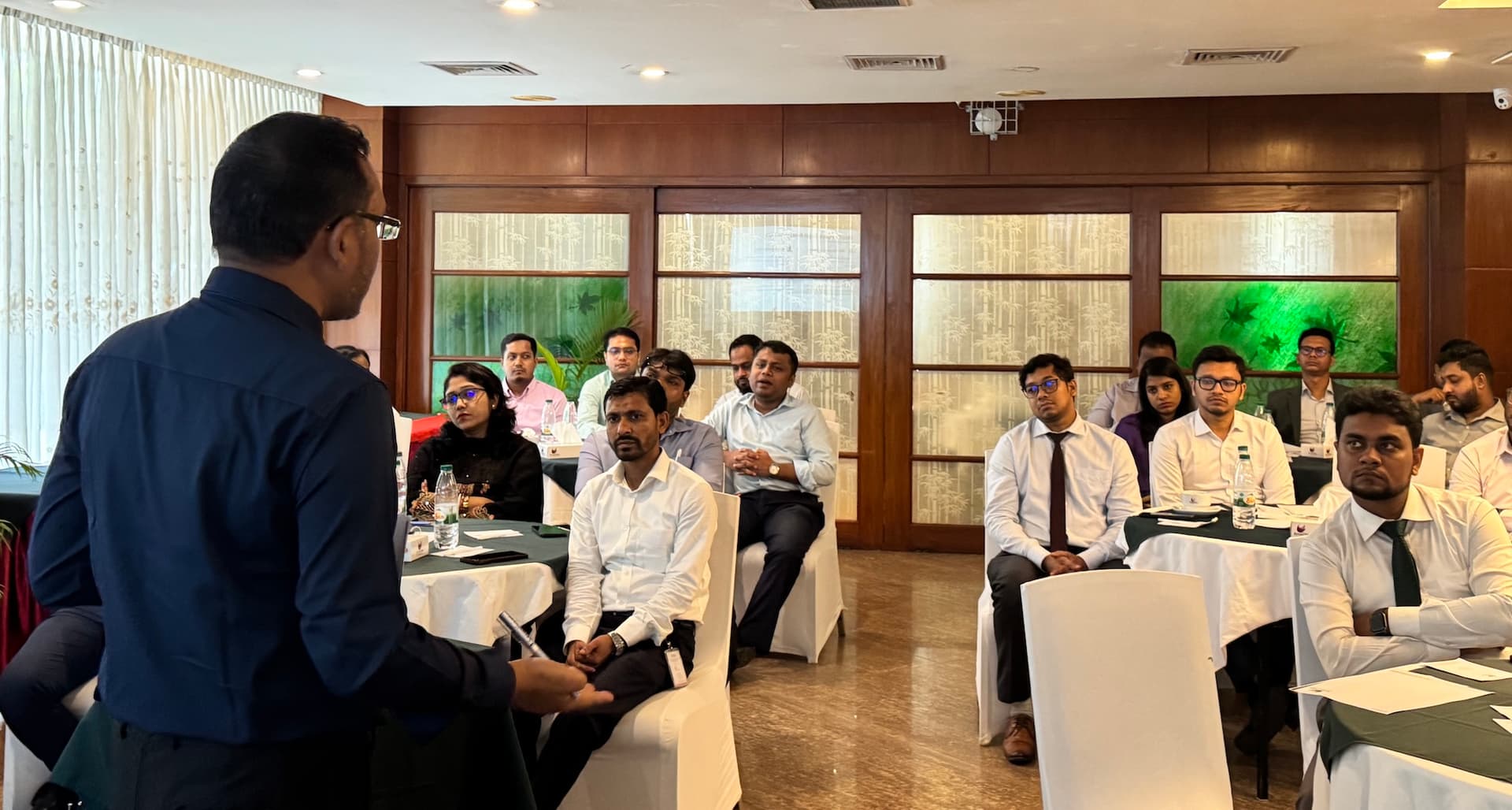
Last week, I had the privilege of guiding 22 bankers from City Bank through a two-day intensive on Emerging Technologies for Future-ready City Bankers. Held at Hotel Bengal Inn in Gulshan, Dhaka, the session brought together a true cross-section of the bank — and the experience left me more optimistic about banking's future than ever.
Who Was in the Room
The participants spanned the full career ladder and nearly every division of the bank. Assistant Managers, Associate Managers, Team Leaders, Officers, and Assistant Officers — 22 people from eight divisions: Retail Banking, Credit & Collection, Operations, Trade Services, Finance, Card Operations, Information Technology, and Medium Business.
They came from Card Ambassadors and Student Centers, from Collections and Credit Analysts, from ATM Operations and Trade Services, from Relationship Management and Information Security. People who don't normally sit at the same table — and that was exactly the point.
What We Covered
Over two days, we built a shared language around the technologies reshaping finance. Day One laid the foundation:
Data, Information & Analytics — We started with the raw material of every modern bank. What separates raw data from actionable information? How do validation and verification differ — and what happens when an NID number is valid but not true? We walked through the journey from digitization (changing the format) to digitalization (changing the process) to automation (changing the labour).
Machine Learning & Artificial Intelligence — We clarified what AI is and isn't, traced the AI/ML/Deep Learning hierarchy, and explored Generative AI, RAG, AI agents, and Agentic AI. Critically, we drew the line between Consumer AI, Narrow AI, and Enterprise AI — the difference between a public library and a company's private vault. Enterprise AI isn't just a smarter model; it's about security, compliance, reliability, and integration into real banking workflows.
Cloud Infrastructure, Blockchain, Robotics, IoT & Immersive Technologies — We examined how these technologies fit together, with real Subcontinent use cases showing IoT monitoring on 5,000+ ATMs and blockchain's role beyond cryptocurrency.
Day Two built on that foundation and turned toward the future:
Digital Banking & Fintech — We looked at global fintech trends and the banking predictions from Deloitte, PwC, Accenture, EY, and KPMG, connecting global insights to the realities of Bangladesh's banking apps and mobile-first market.
AI in Banking, Cybersecurity & Data Governance — We discussed the efficiency-ratio opportunity that PwC estimates at up to 15 percentage points, but grounded it in the responsibilities that come with it: the human firewall, treating data like cash, and the shift from task execution to AI management.
Designing Digital Services & Customer Centricity — Groups learned to map customer jobs, pains, and gains to services that actually deliver value.
The Workshop That Stole the Show
The heart of the program was a hands-on workshop where groups identified repetitive, manual, and document-heavy tasks in their own daily work — and then designed, step by step, how AI, automation, or RPA could handle them.
The room came alive. An Associate Manager from Collections and an Assistant Officer from ATM Operations argued over a process flow on a flip chart. Groups scored their tasks against an automation-readiness checklist, mapped current processes, and sketched AI-powered solutions. The presentations were genuinely exciting — practical, specific, and grounded in problems they face every single day.
Watching people who don't normally collaborate find a shared language was the highlight of my week.
What I Learned
The training taught me as much as it taught the participants.
First, the appetite is real — but the system needs to catch up. Private banks in Bangladesh are eager to embrace emerging technology. Yet they often hit a wall: a central bank still run on legacy thinking, with processes for reporting and data submission that haven't modernized. Banks are ready to move faster, but the regulatory framework — and the old-bureaucrat mindset within it — hasn't kept pace. Until that changes, banks will keep struggling to apply modern methods to central-bank reporting.
Second, the workforce is ready — the permission isn't always there. Every group in the workshop designed a credible, exciting automation plan. The ideas were there. The know-how was there. What's often missing is top-management support and department-head buy-in that would let teams actually implement what they envisioned. If management empowered these teams and provided the support, each group could transform its own workflow with the right technology — today, not in some distant future.
And third, the bankers of Bangladesh are getting ready for the future. Despite the headwinds, this group showed genuine hunger to learn, to question, and to lead change rather than fear it.
Looking Ahead
In five years, the job titles in this room may not exist in their current form. But if these bankers leave curious instead of afraid, they won't be reading job descriptions written by someone else — they'll be writing their own.
I believe the banks that lead in 2030 are not the ones with the most money. They're the ones whose people asked the right questions today.
My gratitude to every City Bank participant who showed up, engaged, and shared their ideas — and to the leadership who made this training possible. This is how we build future-ready banks: one curious, empowered banker at a time.
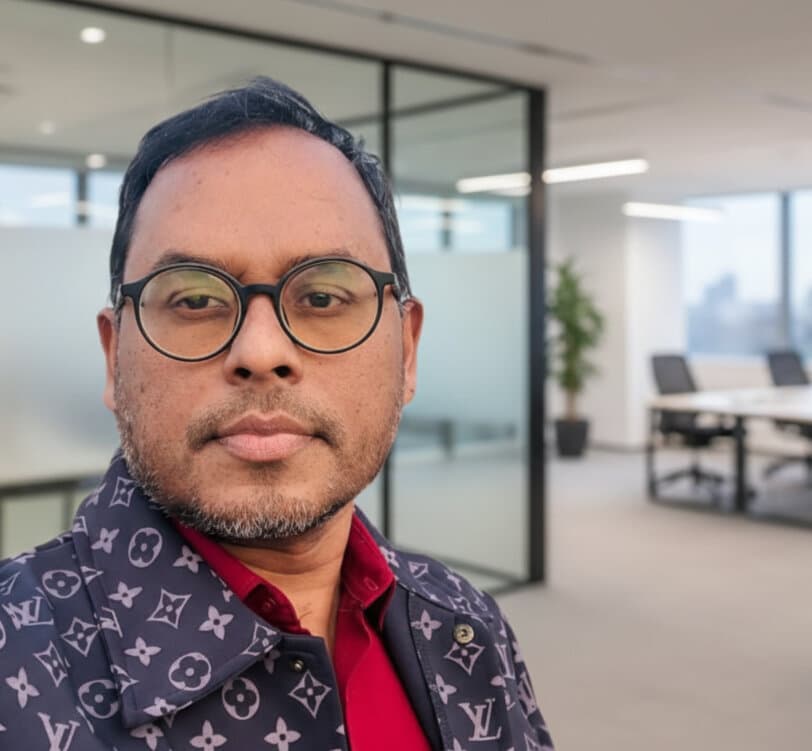
Sadiq M Alam is an ERP consultant and AI expert, co-founder and Managing Director of Metamorphosis Ltd., helping enterprises in Bangladesh and globally translate emerging technologies into practical strategies and measurable business outcomes.
Intéressé par des événements similaires ?
Contactez-nous pour inviter Sadiq M Alam à votre prochain événement ou discuter de collaborations potentielles.
Entrer en contact