Case Study: Park Avenue Coffee — Transforming a Multi-Faceted Passion into a Streamlined Enterprise
Executive Summary
In the highly competitive food and beverage sector, a great product is only half the battle; the other half is operational efficiency. For Park Avenue Coffee, a beloved St. Louis staple, crafting the perfect cup of coffee and the finest baked goods was a natural talent. However, scaling that passion into a complex, multi-faceted business model brought severe backend challenges. After outgrowing a patchwork of fragmented software like QuickBooks and Restaurant365, the company attempted to modernize by implementing NetSuite ERP. Unfortunately, this move resulted in years of frustration, exorbitant costs, and unfulfilled promises.
In early 2024, Park Avenue Coffee found its true operational partner: Odoo. Partnering with Talus ERP for a seamless implementation, the 50-employee enterprise integrated its retail, baking, and roasting divisions into a single, unified database. The transition from NetSuite to Odoo slashed sales order creation time by 75%, accelerated fulfillment and invoicing by 90%, and transformed a grueling week-long year-end inventory process into a seamless task completed by January 2nd. This case study explores how Park Avenue Coffee abandoned an expensive, underdelivering legacy ERP to find speed, synergy, and scale with Odoo.
Introduction: The Birth of a St. Louis Staple
The story of Park Avenue Coffee is one of unexpected inspiration and organic, relentless growth. In 2006, founder Dale Schotte decided to pivot from a 20-year career in the IT industry. Having worked for a consulting firm and collaborated with an entrepreneur who opened a coffee shop, Schotte was inspired by the vibrant community and fast-paced environment of the café world. Leveraging his background in systems and processes, he opened the first Park Avenue Coffee location in St. Louis, Missouri.
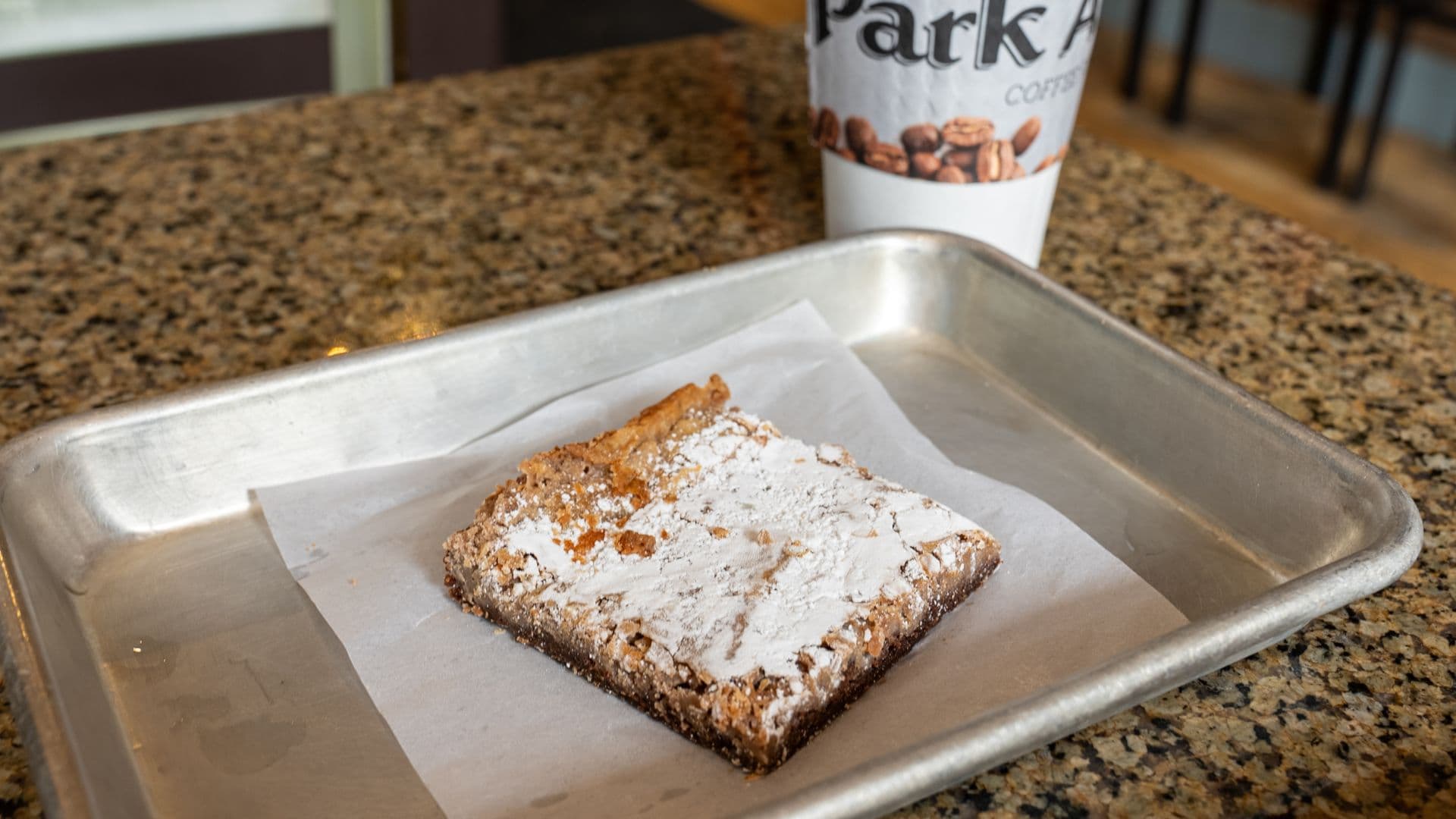
What began as a single neighborhood café quickly blossomed into a thriving enterprise. Schotte understood that to maintain quality control and increase profit margins, vertical integration was necessary. In 2009, Park Avenue Coffee established the Ann & Allen Baking Company, bringing pastry and food production in-house. A few years later, in 2012, the company launched its own coffee roasting operations.
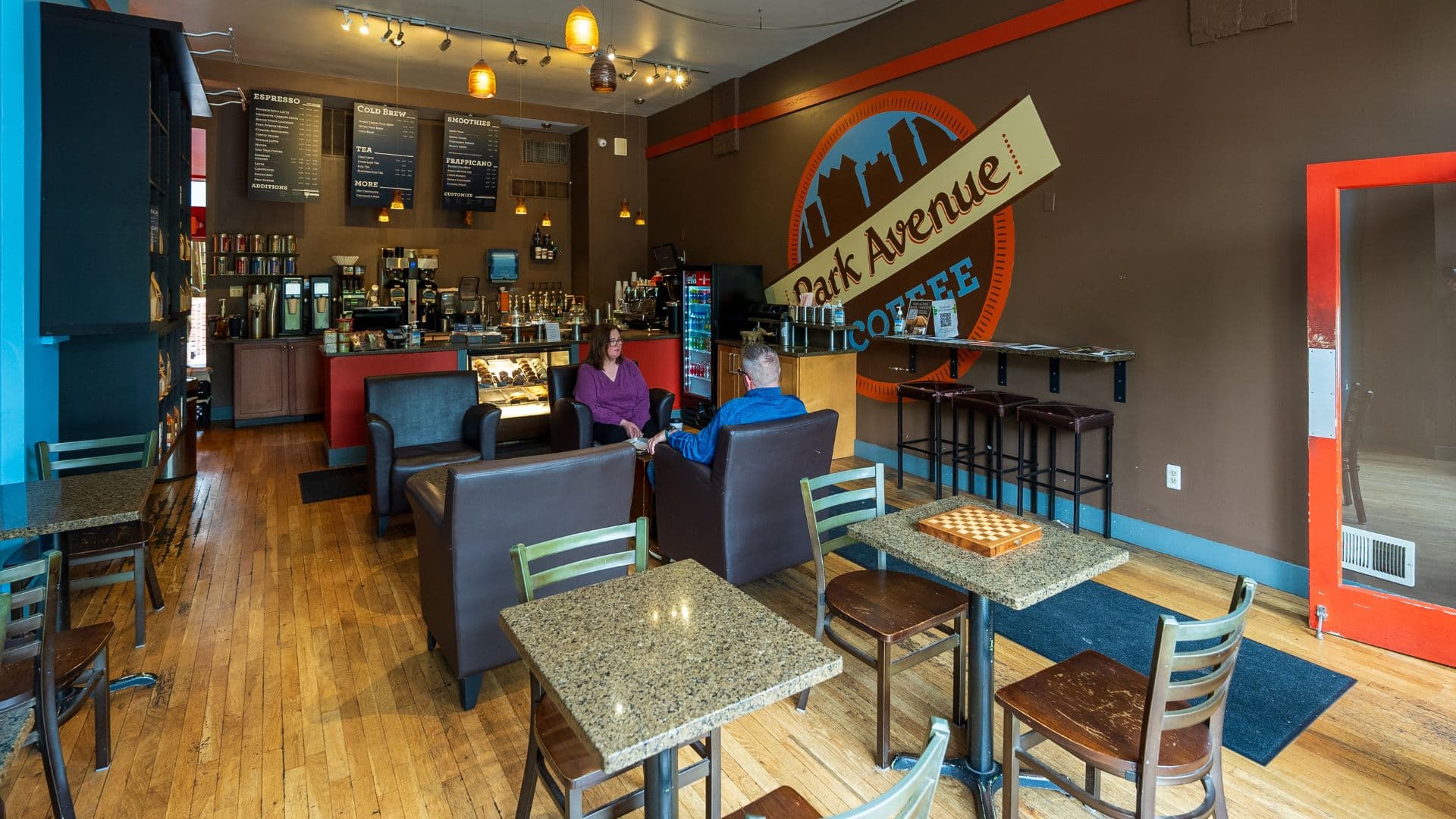
Today, with Dale Schotte at the helm as CEO and his sister, Marilyn Scull, serving as COO, Park Avenue Coffee boasts six retail locations, a dedicated baking division, and a full-scale coffee roasting company. These distinct entities operate harmoniously under a central holding company. Yet, behind the scenes, managing three fundamentally different business models—retail, manufacturing, and wholesale—proved to be an immense logistical hurdle.
The Operational Landscape: A Multi-Faceted Business Model
To understand the challenges Park Avenue Coffee faced, one must understand the complexity of their daily operations. The business is essentially a triad:
- The Retail Cafés: Six fast-paced, customer-facing locations requiring point-of-sale efficiency, shift management, and localized inventory tracking.
- The Roasting Company: A manufacturing arm that sources raw green coffee beans, manages the complex roasting processes (which involves weight loss tracking, quality control, and batch numbering), and distributes to both the retail cafés and external wholesale clients.
- Ann & Allen Baking Company: A perishable goods manufacturing division that requires precise recipe management, daily production planning, and rapid distribution to the cafés before dawn.
Operating under a single holding company with 50 total employees, the enterprise required an intricate dance of inter-company transactions. The cafés are essentially the "customers" of the roasting and baking divisions. For the business to run profitably, inventory needs to move flawlessly between these entities, financials must be consolidated at the holding company level, and purchasing must be centralized to leverage economies of scale.
The Catalyst for Change: The Burden of Disconnected Systems
For years, Park Avenue Coffee relied on the standard toolkit of many growing mid-sized businesses: fragmented, task-specific software.
Initially, they utilized QuickBooks Desktop for their accounting needs, eventually migrating to QuickBooks Online. However, as the roasting and baking divisions scaled, the limitations of QuickBooks became painfully clear. It lacked the robust inventory and manufacturing capabilities required for batch tracking, recipe management, and raw material procurement.
To bridge the gap, the company deployed a patchwork of solutions. They used QuickBooks Enterprise specifically for the roasting company, adopted Restaurant365 to manage the retail coffee shops, and retained QuickBooks Online for the bakery.
The result was an operational bottleneck. With three interconnected businesses utilizing fundamentally different software solutions that could not communicate natively, inefficiencies compounded daily. Key challenges included:
- Fragmented Financial Data: Consolidating financials across the three entities took days of manual reconciliation.
- Cumbersome Inventory Tracking: Moving a bag of roasted coffee from the roastery to a retail café required manual deductions in one system and manual additions in another.
- Rampant Manual Entry: Purchase orders, invoices, and production schedules had to be keyed in multiple times across different platforms, leading to inevitable human error and wasted labor hours.
Park Avenue Coffee desperately needed a unified ecosystem that could handle retail point-of-sale, complex manufacturing, and multi-company accounting simultaneously.
The NetSuite Mirage: Promises vs. Reality
In 2021, recognizing that their fragmented software stack was stifling their growth, Park Avenue Coffee sought a comprehensive Enterprise Resource Planning (ERP) solution. After evaluating the market, they selected Oracle NetSuite, a heavy-hitter in the cloud ERP space.
The expectation was that NetSuite would be the ultimate unifier—a system that could seamlessly handle the holding company's complex inter-company demands. The reality, however, was a costly and exhausting disappointment.
The implementation process turned into an immediate struggle. According to Dale Schotte, the NetSuite deployment was fraught with unmet expectations. "They promised us the world, but completely underdelivered," Schotte recalled. "Even after years, we didn’t have everything we needed."
The financial toll was significant. Park Avenue Coffee was paying $48,000 a year for their NetSuite licensing and support, yet they were operating a system that felt fundamentally broken for their specific workflows.
Beyond the missing features, the daily user experience was agonizing. NetSuite proved to be notoriously sluggish, with employees constantly waiting for screens to load just to perform basic tasks. Furthermore, the system was highly unforgiving regarding user errors. If a mistake was made during an inter-company transaction, employees often had to delete entire journal entries and start from scratch, rather than making simple adjustments.
For a fast-moving food and beverage manufacturer, this rigidity was crippling. Park Avenue Coffee was paying enterprise-level fees for software that was slowing down their operations rather than accelerating them.
The Search for the Ideal Solution: Entering the Odoo Ecosystem
By early 2024, the management team knew they could no longer sustain the operational friction and high costs associated with NetSuite. Park Avenue Coffee initiated a new search for an ERP, cautiously evaluating legacy giants like SAP and Oracle, as well as mid-market solutions like Acumatica.
During their research, the team came across Odoo. The open-source, modular nature of Odoo immediately appealed to Schotte’s IT background, but the sheer breadth of its capabilities at a fraction of NetSuite's cost made the team skeptical. "This seemed too good to be true," Schotte admitted. "We were paying $48,000 a year for NetSuite and still didn’t have a working system."
What ultimately validated their decision to explore Odoo was organic community feedback. The team stumbled upon a Reddit thread where other business owners shared glowing, authentic experiences about their transitions to Odoo. Seeing real-world validation from companies that had faced similar inventory and multi-company challenges gave Park Avenue Coffee the confidence to move forward.
To ensure they didn't repeat the mistakes of their 2021 ERP implementation, Park Avenue Coffee partnered with Talus ERP, an official Odoo partner. Talus brought the necessary technical expertise to analyze the messy, existing NetSuite data, map out the complex workflows of the bakery, roastery, and cafés, and engineer a smooth transition strategy to the Odoo.sh cloud hosting platform.
Implementation and Strategy with Talus ERP
Transitioning from a convoluted NetSuite environment to a new ERP requires precision. Talus ERP played a pivotal role in "cleaning up" the fragmented data that had accumulated over the years.
Because Odoo is modular, Park Avenue Coffee could implement exactly what they needed without the bloated, confusing interfaces that plagued their previous system. For their 10 core ERP users, the implementation focused on a specific suite of interconnected Odoo applications:
- Accounting & Invoicing: To manage the holding company's consolidated financials.
- Inventory & Purchase: To track raw ingredients (green coffee beans, flour, sugar) and packaging across multiple warehouses.
- Manufacturing & Quality: To handle coffee roasting batches and bakery production runs.
- Sales & CRM: To manage wholesale clients and B2B orders.
- Employees: To manage the 50-person workforce.
- Website: To power their online presence and direct-to-consumer sales.
Schotte praised the partnership, noting, "It is a fantastic match. Their expertise helped us clean up and successfully transition from NetSuite to Odoo." Unlike the years of waiting for NetSuite features that never arrived, the Odoo deployment was agile, targeted, and highly effective.
Transformational Results: A Deep Dive into Odoo’s Impact
Since going live on Odoo.sh, Park Avenue Coffee has experienced a night-and-day difference in their operational efficiency. The transition resolved the specific pain points that had hindered their growth for nearly a decade.
1. Seamless Multi-Company Operations
Perhaps the most significant victory was Odoo's native multi-company functionality. Because Park Avenue Coffee operates a bakery, a roastery, and six retail cafés, they generate a massive volume of inter-company transactions.
In the past, ordering baked goods for a café meant manual entry in Restaurant365, followed by redundant manual entry in QuickBooks Online for the bakery to fulfill it. Odoo eliminated this entirely. Today, when a café manager submits a Purchase Order for muffins and espresso beans, Odoo automatically generates a corresponding Sales Order for the Ann & Allen Baking Company and the roasting division.
There is zero duplicate data entry. The financial reconciliations happen automatically in the background, ensuring that the holding company's books are always balanced in real-time. Furthermore, when errors do occur, Odoo allows for seamless adjustments, a stark contrast to NetSuite, which forced users to delete entire entries and start over.
2. Revolutionary Speed in Sales and Order Processing
For the wholesale and B2B side of the business, speed is paramount. Under NetSuite, employees were bogged down by lagging software and endless loading screens. Odoo's modern, lightweight architecture changed the daily reality of the sales and fulfillment teams.
The speed metrics are staggering. Schotte reports that creating a sales order in Odoo takes 75% less time than it did in NetSuite. Furthermore, the downstream processes of fulfilling those orders and generating the final invoices are 90% faster. What used to be a tedious, multi-step chore requiring waiting periods between screen loads is now an instantaneous, fluid workflow.
3. Eradicating the Inventory Nightmare
In the food manufacturing industry, inventory management directly dictates profitability. Perishable goods have strict shelf lives, and raw materials like green coffee fluctuate in price and availability.
Historically, year-end inventory counting was a dreaded event for Park Avenue Coffee. Tracking discrepancies across their disconnected software platforms, reconciling the roastery's stock with the bakery's stock, and finalizing the financial adjustments used to take an entire week of dedicated labor.
With Odoo's unified Inventory and Accounting applications, all stock movements are tracked in real-time throughout the year. Because the system is unified, the data is inherently accurate. The year-end inventory process, which once took a full week, is now effortlessly completed by January 2nd, inclusive of all necessary accounting adjustments. This saves hundreds of hours of labor and allows management to start the new fiscal year with immediate, clear financial insights.
4. Enhancing Quality and Manufacturing Control
Odoo’s Manufacturing (MRP) and Quality apps provided the roasting and baking divisions with tools they never successfully achieved with NetSuite. Bills of Materials (BOMs) can be strictly managed, allowing the bakery to scale recipes dynamically based on daily demand. For the roastery, raw bean tracking, roast profiling, and batch tracking are integrated directly with the quality control modules, ensuring that every bag of Park Avenue Coffee meets their exacting standards before it hits the café shelves.
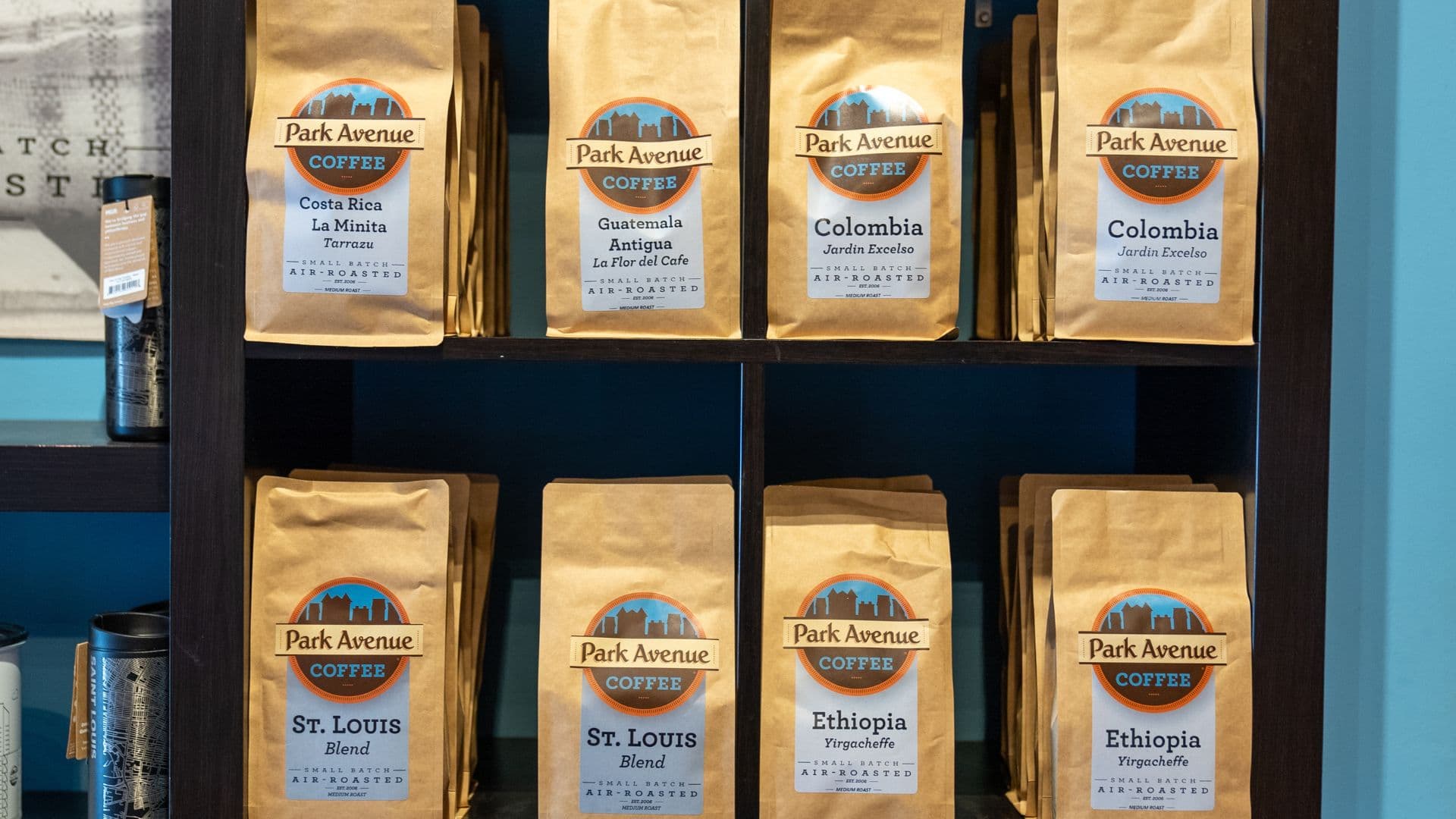
Gallery: Park Avenue Coffee Operations
Conclusion: Brewing Future Success with Odoo
The journey of Park Avenue Coffee highlights a critical lesson for mid-sized manufacturers and retailers: paying premium prices for legacy ERP systems does not guarantee operational success. Complex businesses require agile, intuitive, and highly integrated software to thrive.
By abandoning a $48,000-a-year NetSuite implementation that failed to deliver, Park Avenue Coffee found a true technological partner in Odoo. The transformation was holistic—touching every corner of the business from the bakery floor to the executive accounting dashboards. By unifying their retail, wholesale, and manufacturing arms into a single source of truth, they eliminated redundant data entry, drastically accelerated order fulfillment, and reclaimed a full week of labor previously lost to inventory management.
Dale Schotte, a former IT professional who knows software as well as he knows coffee, summarizes the transformation best: "The time savings, ease of customization, and intuitive interface make Odoo the clear choice. It just works. Dump NetSuite, go Odoo."
Today, Park Avenue Coffee is no longer constrained by its software. With Odoo managing the complexities of their multi-faceted operations, the team can focus entirely on what they do best: serving the St. Louis community with exceptional coffee, phenomenal baked goods, and a passion that is finally matched by their backend efficiency. Armed with a scalable, unified system, Park Avenue Coffee is perfectly positioned for its next era of expansion.
¿Le gustó esta idea?
Comparta sus pensamientos o comuníquese con nosotros para analizar cómo se aplican estas estrategias a su negocio.
Ponte en contacto