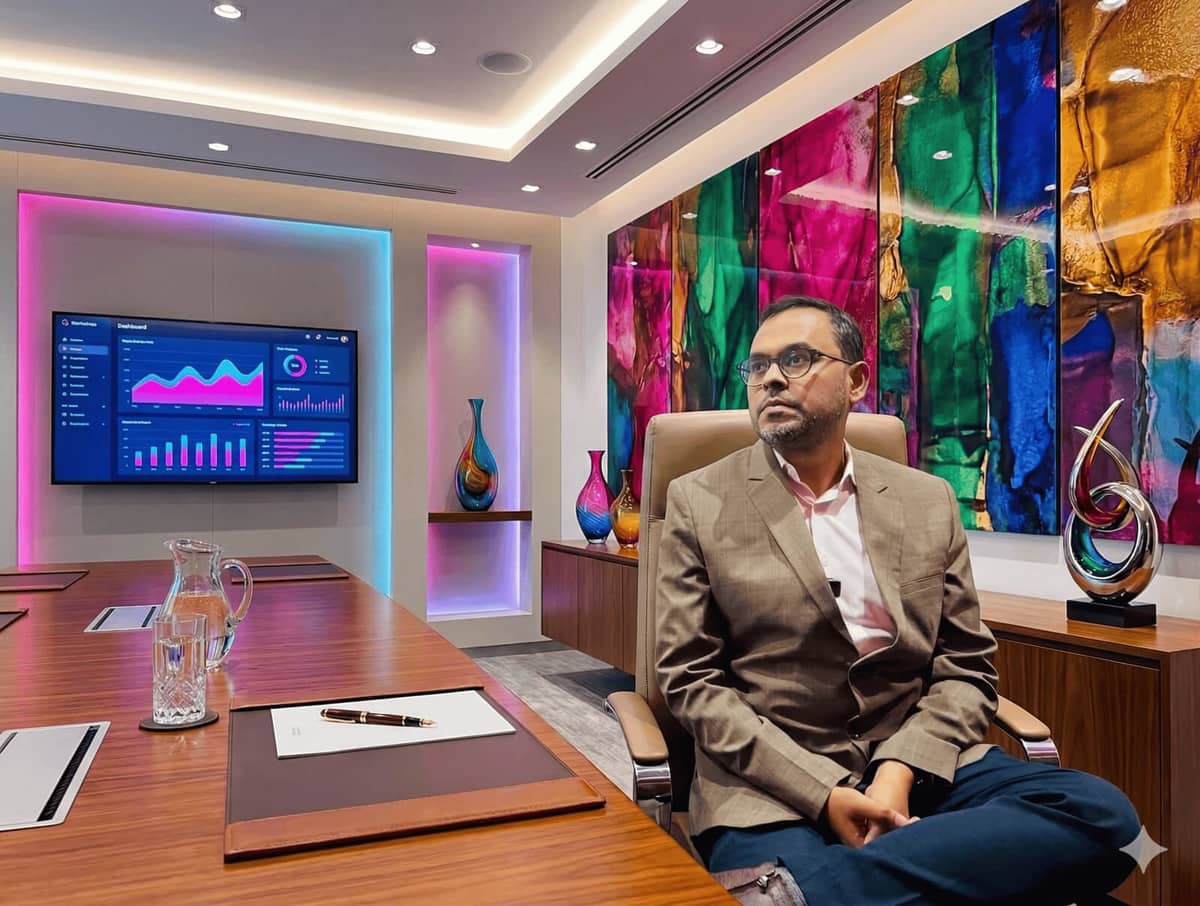

ERP Project Governance Charter: Best Practices for Successful Odoo ERP Implementations
ERP implementations are among the most complex transformation initiatives a company can undertake. Unlike typical IT projects, an ERP system reshapes finance, operations, supply chain, sales, HR, and decision-making processes across the entire organization.
Because of this complexity, successful implementations require a well-defined Project Governance Charter.
From an Odoo ERP consulting perspective, a strong governance charter ensures the project stays aligned with business objectives, avoids scope creep, and enables fast executive decisions when challenges arise.
In this guide, we will explore ERP governance charter best practices, the structure of a governance framework, and how to design it specifically for an Odoo implementation project.
What Is an ERP Project Governance Charter?
An ERP Project Governance Charter is a formal document that defines:
- Decision-making structure
- Roles and responsibilities
- Escalation procedures
- Project oversight mechanisms
- Reporting and accountability framework
It ensures that strategic leadership, project teams, and ERP consultants operate within a clear governance structure.
ERP governance is essential because ERP initiatives involve multiple stakeholders, large budgets, and cross-departmental change. Effective governance ensures alignment between business strategy and implementation decisions.
Why Governance Is Critical for Odoo ERP Projects
Even though Odoo is known for its flexibility and modular architecture, the success of an Odoo project still depends heavily on governance.
Without governance, Odoo projects often fail due to:
- Scope creep from excessive customization
- Lack of executive alignment
- Slow decision-making
- Poor change management
- Lack of accountability
A structured governance model enables organizations to:
- Maintain alignment between ERP implementation and business goals
- Manage risks and change requests
- Ensure cross-department collaboration
- Provide executive oversight
Projects with strong governance structures and active steering committees are significantly more likely to be completed on time and within budget.
Core Principles of an ERP Governance Charter
Before designing governance structures, organizations should align around a few guiding principles.
1. Business Ownership (Not IT Ownership)
ERP is a business transformation program, not an IT deployment. Governance must therefore include:
- Finance leadership
- Operations leadership
- Executive management
- Business process owners
IT supports the system but business leaders own the processes.
2. Clear Decision Authority
ERP projects fail when decision rights are unclear. Your charter must clearly define:
- Who approves scope changes
- Who controls budget decisions
- Who resolves cross-department conflicts
Effective governance structures define clear decision rights and escalation paths.
3. Accountability Through Defined Roles
Every participant in an ERP project must know:
- Their responsibilities
- Their deliverables
- Their decision authority
A RACI framework (Responsible, Accountable, Consulted, Informed) is widely used to enforce accountability.
4. Structured Communication
ERP governance must define communication cadence such as:
- Weekly project meetings
- Monthly steering committee meetings
- Executive progress reviews
Regular reporting ensures transparency and prevents issues from escalating unnoticed.
Recommended Governance Structure for Odoo ERP Projects
Below is the governance structure typically recommended by experienced Odoo consultants.
Executive Sponsor
       │
Steering Committee
       │
Program Management Office (PMO)
       │
Project Manager (Client)
       │
Odoo Implementation Partner
       │
Functional Leads & Technical Leads
       │
Key Users / SMEs
Key Governance Roles in an Odoo ERP Project
1. Executive Sponsor
Usually the:
- CEO
- CFO
- COO
Responsibilities:
- Champion the ERP initiative
- Ensure strategic alignment
- Approve major investments
- Resolve organizational resistance
The executive sponsor signals that the ERP initiative is a strategic priority for the organization.
2. Steering Committee
The steering committee acts as the strategic decision-making body. Members typically include:
- Executive Sponsor
- CFO
- COO
- Head of Operations
- IT Director
- ERP Consultant representative
Responsibilities:
- Approve scope, timeline, and budget
- Monitor project progress
- Resolve escalated issues
- Ensure cross-department collaboration
The steering committee provides strategic oversight and removes organizational roadblocks.
3. Project Management Office (PMO)
The PMO ensures disciplined project execution.
Responsibilities:
- Track schedule and milestones
- Maintain risk and issue registers
- Monitor budget performance
- Prepare governance reports
The PMO connects operational execution with executive governance.
4. Client-Side Project Manager
The internal project manager is responsible for:
- Coordinating internal teams
- Managing scope and timeline
- Ensuring resource availability
- Escalating risks to governance bodies
This role is critical for organizational change management.
5. Odoo Implementation Partner
In Odoo projects, the implementation partner provides:
- Functional consultants
- Technical developers
- Solution architects
Responsibilities include:
- System configuration
- Module implementation
- Integration development
- User training
They collaborate with the client PM to deliver project milestones.
Essential Sections of an ERP Governance Charter
A well-structured governance charter should include the following sections.
1. Project Vision and Strategic Objectives
Define:
- Business problems the ERP will solve
- Strategic goals
- Expected benefits
Example objectives:
- Unified financial reporting
- Real-time inventory management
- Automated procurement workflows
- Integrated CRM and sales management
2. Scope Definition
Clearly define:
- Included Odoo modules
- Excluded modules
- Business processes impacted
- Implementation approach
Example: Included modules:
- Odoo Accounting
- Odoo Inventory
- Odoo Sales
- Odoo Manufacturing
Excluded:
- Odoo PLM (future phase)
3. Governance Structure
Document the organizational structure of the project. Include:
- Steering committee composition
- Project team structure
- Decision authority levels
This section ensures clear accountability across all stakeholders.
4. Decision-Making Framework
Define how decisions will be made.
Example decision hierarchy:
| Decision Type | Authority |
|---|---|
| Strategic scope change | Steering Committee |
| Budget change | Executive Sponsor |
| Functional design | Project Manager + Consultant |
| Configuration decisions | Functional Leads |
This prevents delays caused by unclear authority.
5. Risk Management Framework
ERP projects must maintain a risk register. Common ERP risks include:
- Data migration errors
- Integration failures
- User resistance
- Scope creep
- Resource shortages
Risks should be reviewed regularly by governance bodies.
6. Change Control Process
Odoo is highly customizable, which can easily lead to excessive customization requests. Governance must define a formal change process:
- Change request submitted
- Impact analysis conducted
- Steering committee approval for major changes
- Implementation scheduled
This prevents uncontrolled scope expansion.
7. Communication Plan
Define communication cadence such as:
| Meeting Type | Frequency |
|---|---|
| Project Team Meeting | Weekly |
| Functional Workshops | Weekly |
| Steering Committee | Monthly |
| Executive Review | Quarterly |
Structured communication keeps stakeholders aligned.
8. Project KPIs and Reporting
Governance should track project performance using KPIs such as:
Project KPIs:
- Milestone completion rate
- Budget variance
- Open issues
- Testing defect rates
Business KPIs after go-live:
- Inventory accuracy
- Financial closing cycle
- Order-to-cash cycle time
- User adoption rate
Monitoring KPIs ensures accountability and transparency.
Odoo-Specific Governance Best Practices
Experienced Odoo consultants follow several governance best practices.
Minimize Customization
Odoo works best when companies adopt standard workflows. Governance should require:
- Business justification for customization
- ROI analysis for custom features
- Steering committee approval for major developments
Enforce Phased Implementation
Recommended phases:
- Core ERP (Accounting + Sales + Inventory)
- Manufacturing or advanced modules
- CRM automation
- Advanced analytics
Phased rollout reduces risk.
Strong Key User Network
Key users should:
- Participate in workshops
- Test configurations
- Train end users
They become internal ERP champions.
Common ERP Governance Mistakes
Avoid these common pitfalls:
- Weak executive sponsorship: Without leadership support, ERP adoption fails.
- Slow decision making: ERP projects require fast executive decisions.
- Over customization: Customization increases complexity and upgrade costs.
- Poor change management: Users must be prepared for process changes.
Final Thoughts
An ERP implementation is not just a technology project—it is an enterprise transformation initiative.
A strong ERP Project Governance Charter provides the framework necessary to:
- Align leadership
- Control scope
- Manage risk
- Ensure accountability
- Deliver measurable business value
For organizations implementing Odoo ERP, governance becomes even more critical because of the system’s flexibility. With proper governance, companies can leverage Odoo’s modular architecture while maintaining discipline in implementation.
Expert Tip (Consultant Insight) The best Odoo implementations succeed not because of the software—but because of strong governance and executive leadership.
Hat Ihnen dieser Einblick gefallen?
Teilen Sie Ihre Gedanken mit oder kontaktieren Sie uns, um zu besprechen, wie diese Strategien auf Ihr Unternehmen anwendbar sind.
Nehmen Sie Kontakt auf