
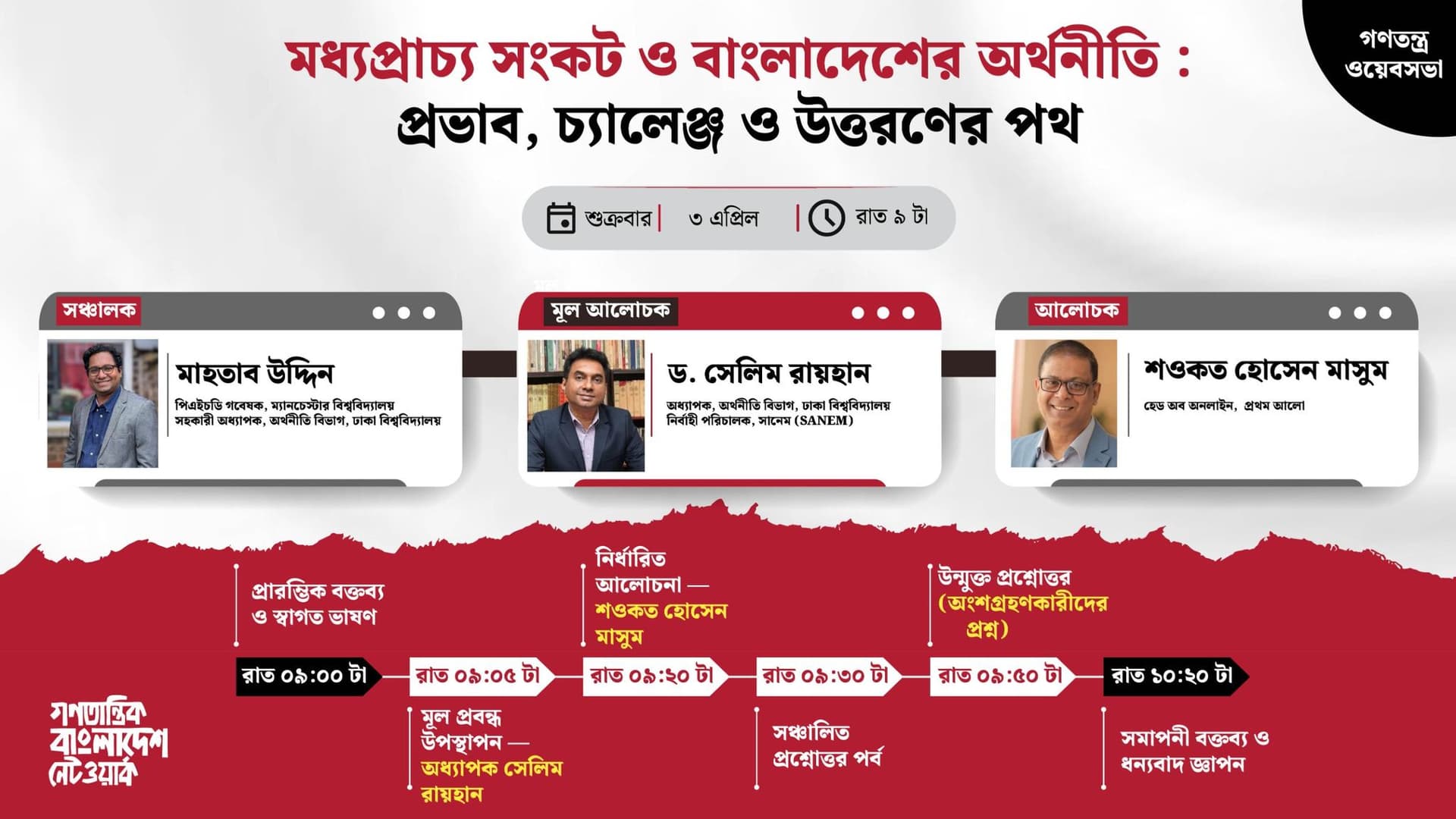
Webinar on Middle East Crisis and Bangladesh Economy: Impact, Challenges and Way Out
On 3rd April 2026, I had the privilege of participating as a guest in an webinar titled "Middle East Crisis and Bangladesh Economy: Impact, Challenges and Way Out." With the conflict involving the US, Israel, and Iran escalating since the strikes in late February, and the subsequent closure of the Strait of Hormuz, we aren't just watching a distant war on the news; we are feeling its pulse in our markets, our fuel pumps, and our families' livelihoods.
The Reality Check: A 3% GDP Risk?
The heart of the session was a keynote by Dr. Selim Raihan (Professor of Economics, DU & Executive Director of SANEM). He shared the "main extract" of his latest research, and the numbers were a wake-up call.
According to his simulations, the combined shocks of this war—energy prices, shipping disruptions, and falling remittances—could shave 1.2% to 3% off Bangladesh’s GDP. Here are the three "front lines" for our economy that we discussed:
-
The Energy Stranglehold: With the Strait of Hormuz closed, global oil prices have surged (Brent Crude crossing $120/barrel). For a country like ours that imports 62% of its energy, this is a direct hit to our electricity grid and industrial production.
-
The Remittance Lifeline: Over 55% of our remittances come from the Gulf. With the war affecting countries hosting millions of our workers, a 10% drop in remittance inflow isn't just a statistic—it’s a household crisis for millions of families.
-
Trade & Logistics: The "Operation Epic Fury" fallout has sent freight and insurance costs through the roof. Our RMG sector, the backbone of our exports, is facing a "double squeeze": rising production costs and slowing global demand.
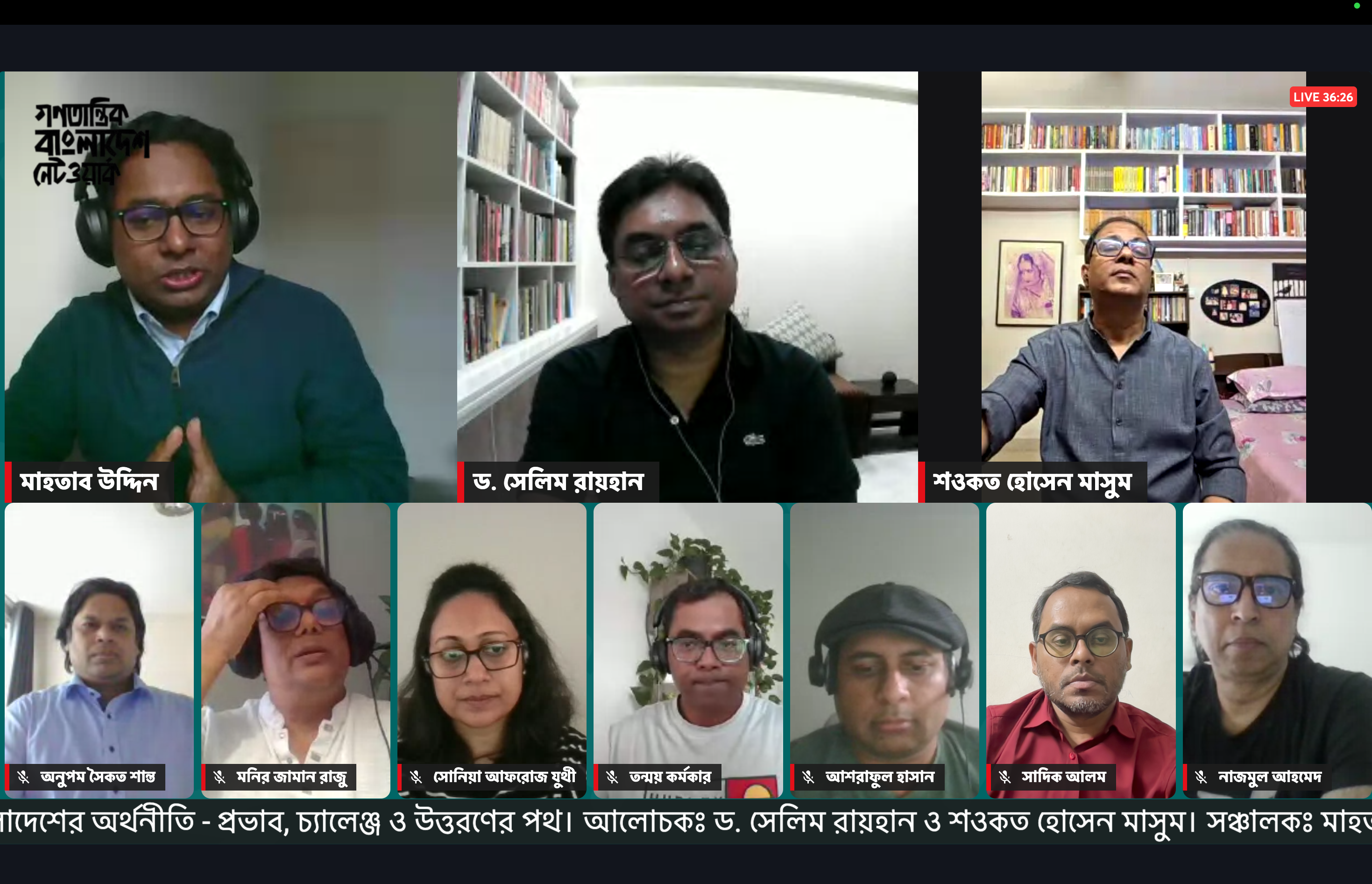
Insights from the Floor
The discussion, enriched by Shawkat Hossain Masum (Prothom Alo) and moderated by Mahtab Uddin (University of Manchester/DU), didn't just dwell on the gloom. We spent a significant amount of time debating the "Way Out."
The consensus? We can no longer afford to be "caught unprepared." The conversation pushed for:
- Aggressive Energy Diversification: Accelerating offshore gas exploration in the Bay of Bengal to reduce our 2026-level dependency on the Gulf.
- Worker Protection: Establishing a framework for migrant workers, including insurance and evacuation plans for those in high-risk zones.
- Logistics Resilience: Completing the Matarbari deep-sea port to better handle shipping shocks.
My Personal Takeaway
Participating in this conference at 9 PM on a Friday might not sound like "weekend fun" to everyone, but sitting in that virtual room felt essential. We are living through a "stress-test" for our national resilience.
The war is unequal and unjust, particularly the toll it has taken on civilians and children, but the economic "counter-war" we face requires cold, hard strategy. As a guest at this event, I was struck by the shared sense of urgency: our preparations today will determine how we emerge from the shadows of this Middle East crisis tomorrow.
Final Thought: We can't control the geopolitical winds, but as Dr. Raihan’s research suggests, we can certainly do a better job of setting our own sails.
Missed the session? You can still catch the full recording on the Democratic Bangladesh Network's Facebook and YouTube channels.
Interessiert an ähnlichen Veranstaltungen?
Laden Sie Sadiq M Alam zu Ihrer nächsten Veranstaltung ein oder besprechen Sie mögliche Kooperationen.
Nehmen Sie Kontakt auf