
AI Governance for Enterprise: Bangladesh's Rulebook Is Live, Its Readiness Is Not
AI Governance for Enterprise: Bangladesh's Rulebook Is Live, Its Readiness Is Not
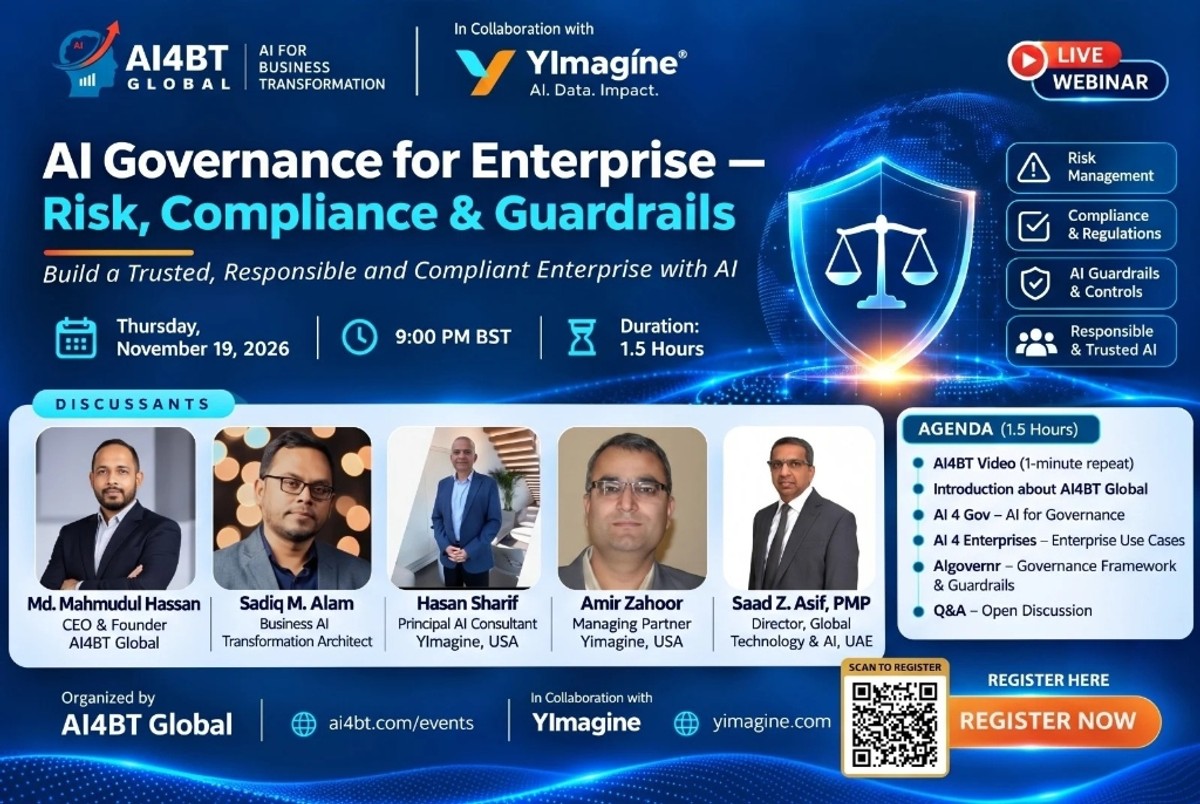
On 19 November 2026, AI4BT Global hosted a live webinar on AI governance for enterprise, organised by me, Sadiq M. Alam, Business AI Transformation Architect, with Md. Mahmudul Hasan of AI4BT, and delivered alongside YImagine Inc. Four practitioners spent the hour on one question: what risk enterprise AI creates, what Bangladeshi law already requires, and what governance looks like when an auditor asks for evidence.
The premise was an honest read of the local market: enterprise-grade AI adoption here is still young, and very few organisations have engaged seriously with governance as a discipline. Tools are being procured and pilots funded faster than the policies meant to govern them.
The problem is not discipline. It is design
Sadiq opened with market data: 66% of office professionals have used an AI tool at work they believed was not permitted, 45% used an unsanctioned tool in the past thirty days, and 31% of generative AI users do so without their employer's knowledge. Eighty-eight per cent have put real work content into public AI tools; 34% have entered customer data. The samples are American, British, Australian and Japanese — no Bangladeshi equivalent exists — but mobile-first adoption probably makes it worse here.
The reframe set the tone: shadow AI is not a discipline problem, it is a design problem. Staff are not rebelling; they are bypassing a path slower than their deadline. A ban produces concealment, not compliance.
What the law already says
Bangladesh's position proved further along than most participants expected. The Personal Data Protection Act, 2026 (Act 63) is already in force, deemed effective from 6 November 2025. Its lawful-basis, sensitive-data, retention and breach duties bind today, and facial images and voiceprints are named sensitive — placing facial recognition and voice analytics in the hardest tier.
Two duties wait on a gazette notification, up to eighteen months out: the Chief Data Officer appointment (section 23) and the penalty machinery (sections 31–35), including fines of Tk 25–50 lakh. Read that as a build period, not as permission. The National AI Policy 2026–2030 remains a draft — risk tiers, algorithmic impact assessments, a right to human review — with an AI Act signposted for 2028. The Cyber Security Act, 2026 (Act 81) is in force and reaches AI tools and agents through its security duties.
AI for government
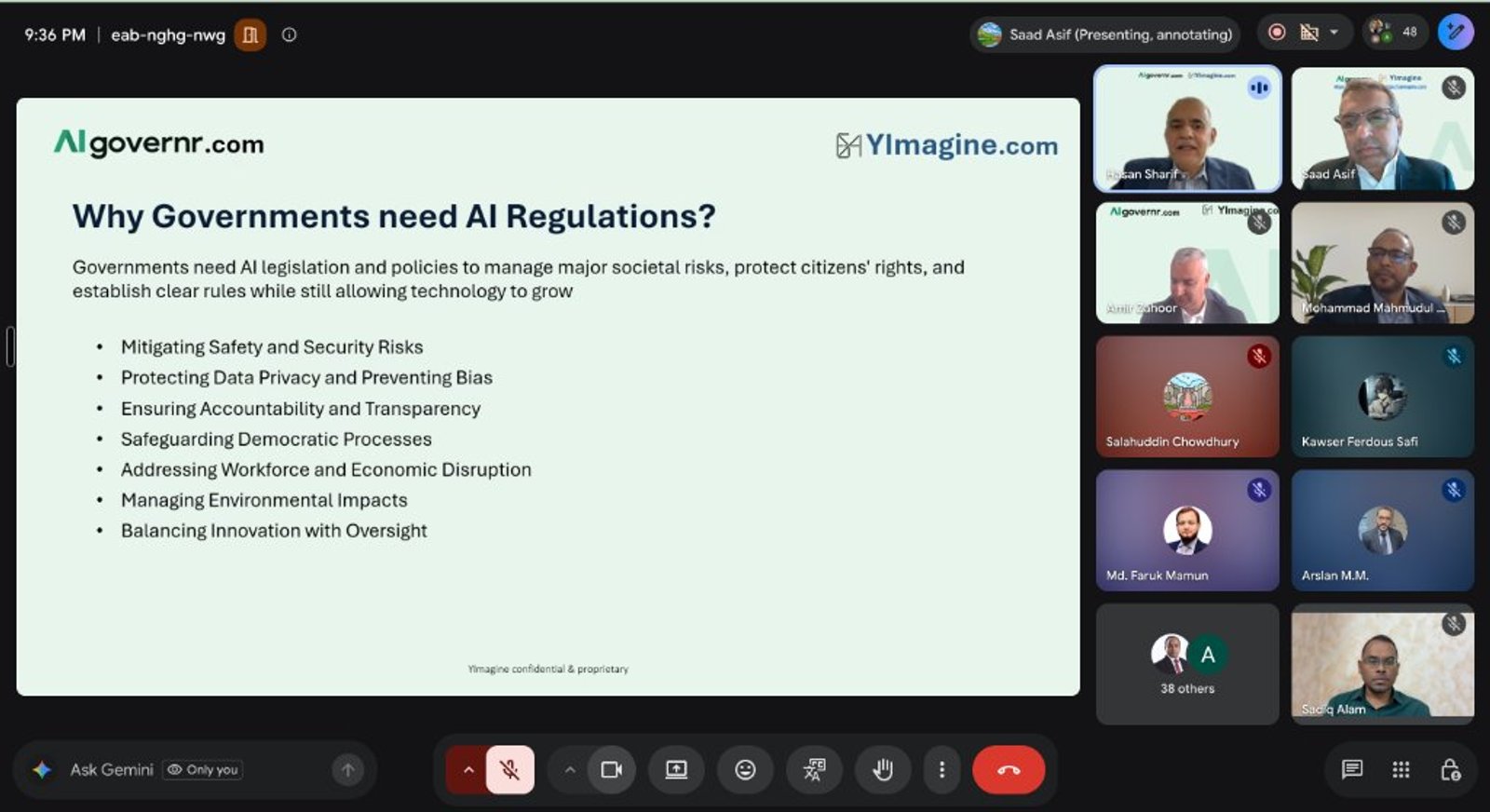
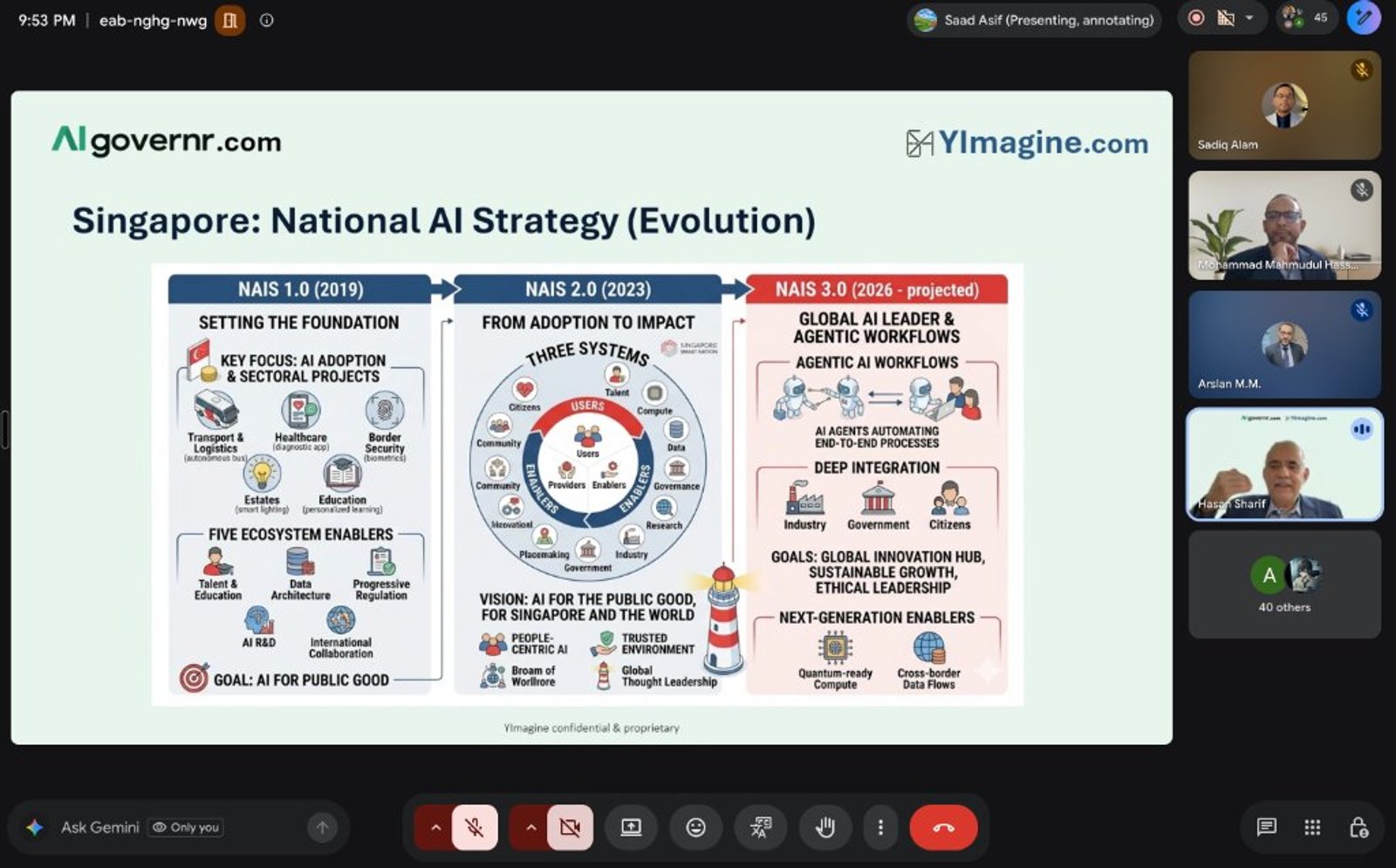
Hasan Sharif of YImagine opened the government segment with the case for legislation: safety, privacy and bias, accountability, election integrity, workforce disruption and environmental cost. The comparative sweep stayed pragmatic: the EU AI Act's four risk tiers, the American mix of a binding National AI Initiative Act and a voluntary AI Bill of Rights, the UK's sector-regulator model with sandboxes and AI Growth Zones, and the strategies of Japan, the UAE, Singapore and Ireland.
Benchmarking tools were framed as a starting point rather than a scoreboard. UNESCO's Bangladesh readiness assessment named the governance gaps and recommended a central AI office, vendor certification and mandatory public-sector audits.
AI for enterprise
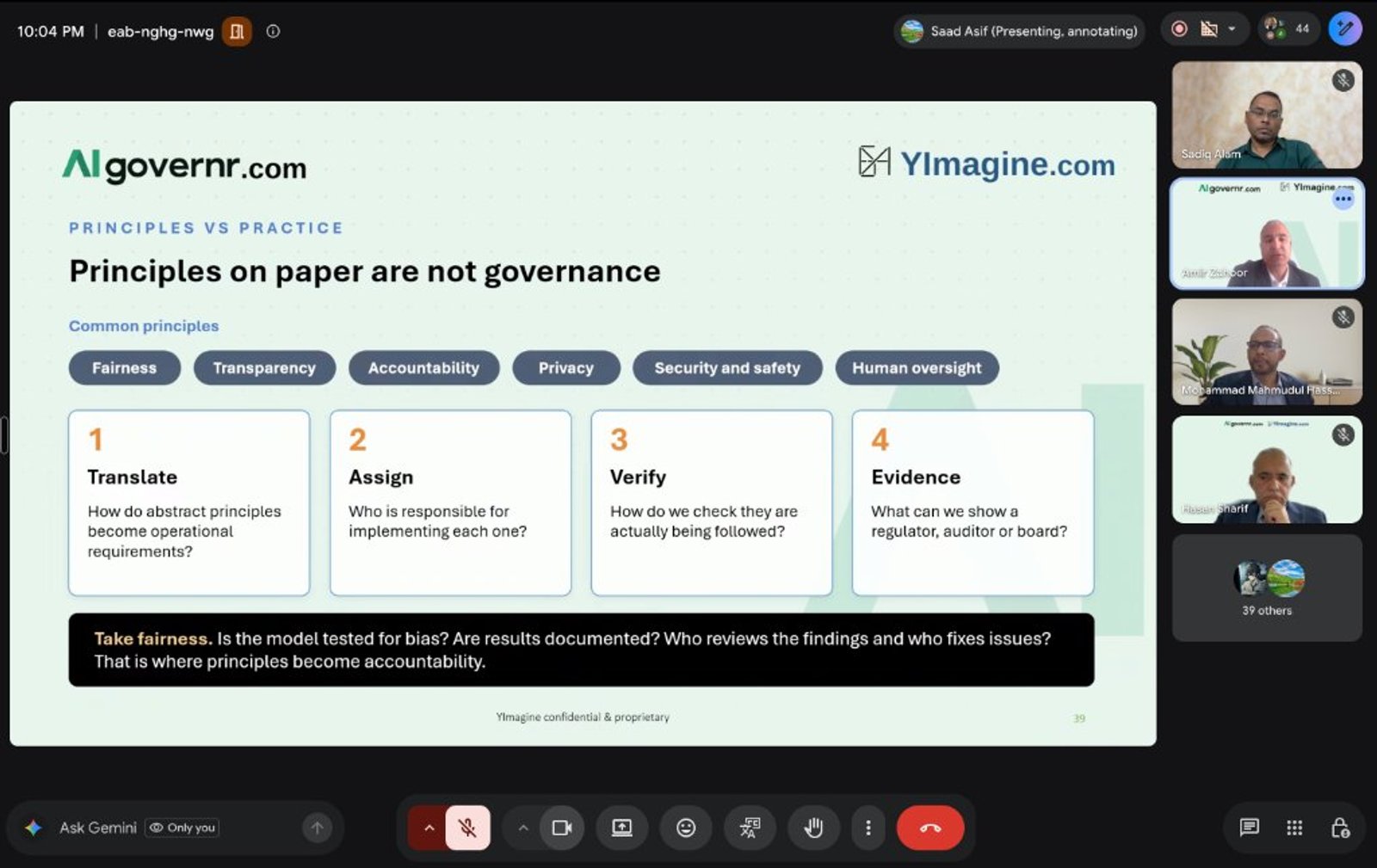
Amir Zahoor, Managing Partner at YImagine, made the enterprise case with harder numbers: 88% of organisations use AI, 51% have already experienced a negative consequence, and 362 AI incidents were documented in 2025. Principles on paper are not governance, he argued: fairness and accountability become real only when translated into requirements, owned, verified and evidenced.
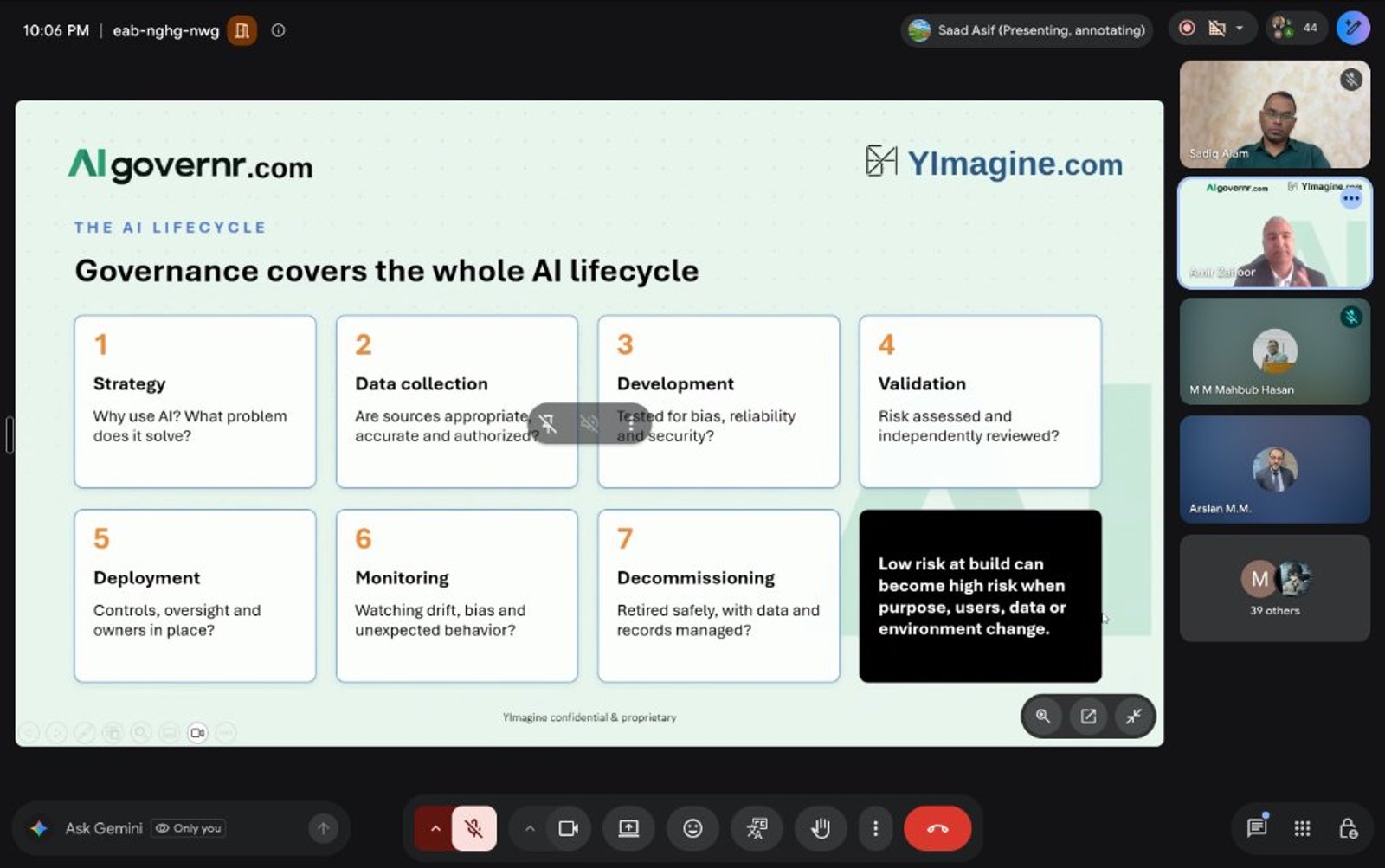
The sharpest point was that accountability cannot be delegated to vendors or to models: every AI system needs a named owner, an escalation path and board visibility, like any other enterprise risk. The segment traced the lifecycle from strategy to decommissioning, noting that a system low-risk at build turns high-risk when purpose, users or data change. On agentic AI the guidance was blunt — treat agents as privileged users, with their own credentials, least privilege, written action boundaries, human approval for consequential actions and a tested ability to stop and revoke.
Presentation & Key Frameworks
From framework to evidence
A live walkthrough of AIgovernr showed the argument in operations — inventory, risk classification, assessments, owners, findings, monitoring and audit-ready evidence in one place.
Audience questions
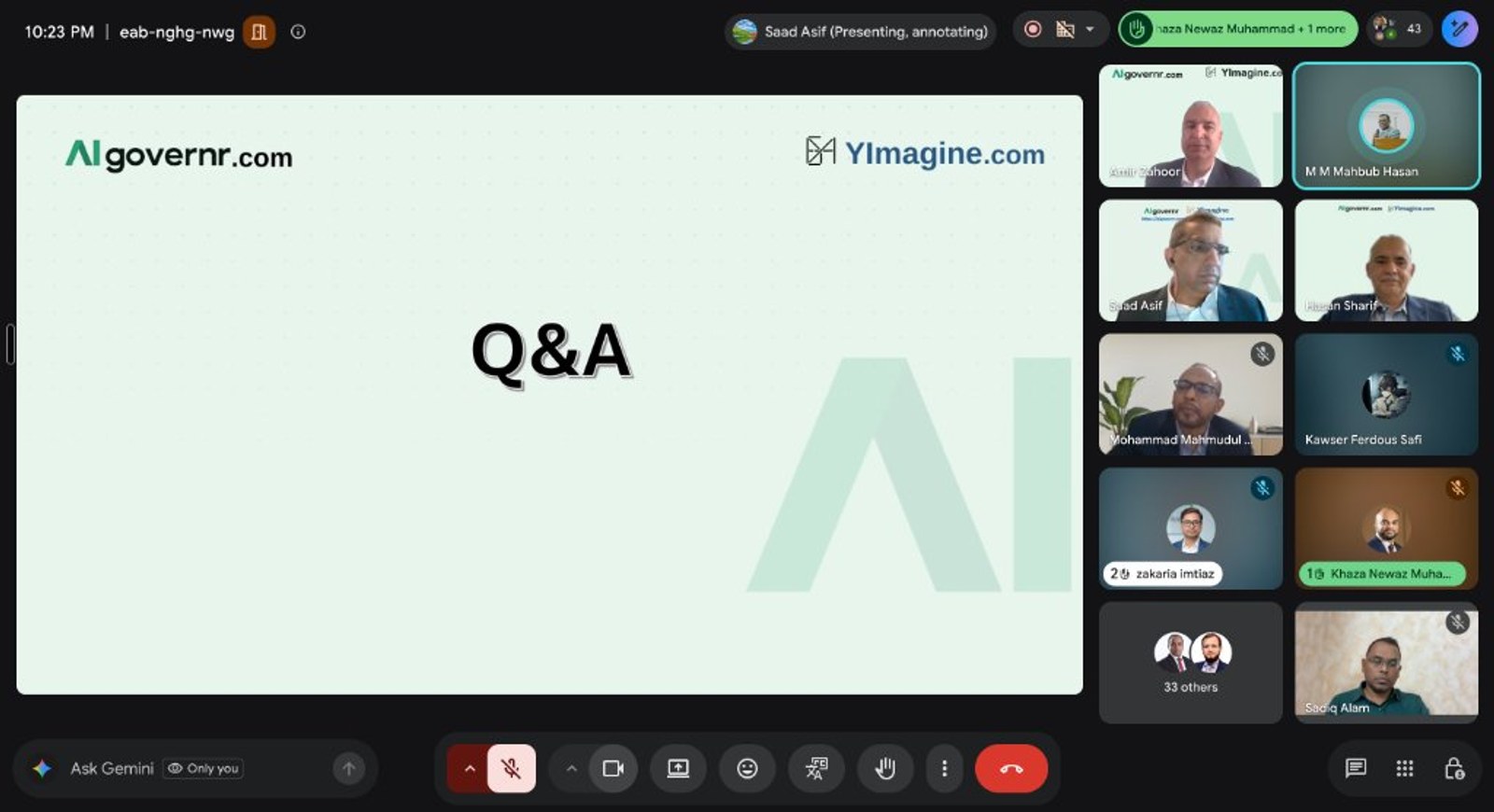
The Q&A, moderated by Saad Z. Asif, drew practical questions from both government and enterprise participants: where to begin, how to evidence controls to a board or regulator, and what changes when AI sits inside a third-party service. The panel answered across all four segments.
What participants took away
The close came down to three moves. See it: inventory and risk-classify every AI system and vendor model. Own it: assess the highest-risk systems and name accountable owners. Prove it: set metrics, monitor continuously and train each role. You cannot govern what you cannot see, demonstrate accountability without evidence, or claim effective governance without testing the controls.
With a data protection law already binding, penalties waiting on a gazette notification and an AI Act signposted for 2028, organisations that move early are not performing compliance theatre. They are buying time, and building the evidence they will be asked for later.
The webinar was organised by Sadiq M. Alam with Md. Mahmudul Hasan of AI4BT Global, and delivered with YImagine Inc. AI4BT offers a complimentary executive discovery conversation, a Human-AI Readiness Assessment and a 90-day roadmap — contact@ai4bt.com.
Interessiert an ähnlichen Veranstaltungen?
Laden Sie Sadiq M Alam zu Ihrer nächsten Veranstaltung ein oder besprechen Sie mögliche Kooperationen.
Nehmen Sie Kontakt auf