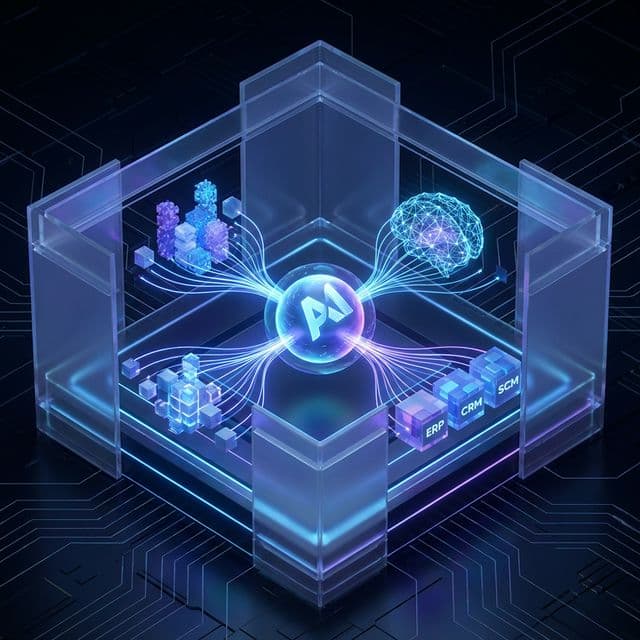

The Agentic Divide: How SAP and Odoo are Architecting the Future of ERP AI
In 2026, the era of the "LLM wrapper" in enterprise software is officially dead. The conversation has shifted entirely toward autonomous, agentic workflows—AI that doesn't just draft emails, but actively queries databases, executes multi-step logic, and resolves operational bottlenecks without human intervention.
As an ERP and AI systems architect, I frequently evaluate how different platforms are integrating these next-generation capabilities. When comparing SAP Business AI (Joule) with the latest iterations of Odoo AI, a fascinating dichotomy emerges. Both are incredibly powerful, but their fundamental architectures reflect vastly different philosophies regarding governance, scale, and deployment.
The Architectural Clash: Governance vs. Agility
The difference between SAP and Odoo AI is not just about features; it is about where the AI "sits" in relation to the company's data and operations.
SAP Joule: The Fortified Gateway
SAP treats AI as a centralized, highly governed enterprise access layer. Through the SAP Business Technology Platform (BTP) and the SAP AI Agent Hub, Joule acts as a "front door" to a massive, often heterogeneous ERP estate.
Because SAP operates at the highest levels of global enterprise, its AI architecture prioritizes compliance (such as strict adherence to the EU AI Act), data obfuscation, and permission cascading. Before an SAP agent executes a high-risk task—like reallocating a multi-million dollar procurement budget—it must pass through multiple layers of policy checks. This makes SAP's AI incredibly secure, but it also necessitates a heavier implementation footprint.
Odoo AI: The Embedded Engine
Odoo takes a drastically different approach. Because of its modular nature, Odoo bakes AI directly into the daily workflows of its core apps without requiring a centralized middleware platform like BTP. It is native and frictionless.
Furthermore, Odoo's adoption of the Model Context Protocol (MCP) server architecture is a game-changer for mid-market agility. By allowing external LLMs (like Anthropic's Claude, Google's Gemini, or OpenAI) direct, structured read/write access to the Odoo database via webhooks and MCP nodes, Odoo democratizes agentic workflows. Users can build powerful automations in tools like n8n, granting an external AI the ability to directly read a CRM state, draft a quote, and execute a state change in the ERP.
[!NOTE] The Key Insight: SAP forces AI to pass through a centralized governance hub, making it safer for highly regulated enterprise processes but slower to deploy. Odoo allows direct API/MCP connections, making it highly agile but placing the burden of governance entirely on the user.
Core Capabilities in Practice
How do these architectural differences play out on the floor?
- Massive Scale vs. Immediate Impact: SAP Joule is designed for massive document ingestion, capable of reasoning over thousands of documents per pipeline to align corporate policy with procurement runs. Odoo AI focuses on immediate administrative relief—such as OCR intelligently auto-drafting vendor bills and cutting manual data entry by up to 70% instantly.
- Custom AI Development: SAP offers Joule Studio, a low-code builder aimed at developers and architects to build custom AI agents that adhere to corporate governance. Odoo, particularly in v18, allows super-users to configure AI agent rules and prompts via a no-code UI directly inside the modules, enabling rapid deployment of level-1 support agents or level-2 automation.
- Predictive Operations: Both systems excel here, but with different scopes. SAP optimizes complex supply chain networks and multi-language vendor catalogs. Odoo uses local predictive algorithms for highly accurate demand forecasting, warning users of stock-outs based on historical sales velocity.
Architectural & Feature Matrix
| Feature / Aspect | SAP AI (Joule) | Odoo AI |
|---|---|---|
| Primary Target Market | Large Enterprise, Global Multinationals | SMEs, Mid-Market, Agile Enterprises |
| Integration Architecture | Centralized via SAP BTP & AI Agent Hub | Decentralized, in-module & external MCP Server |
| Data Governance | Strict, baked-in compliance (EU AI Act ready) | Managed by user/admin via API permissions |
| Custom Agent Building | Joule Studio (Developer/Architect focus) | No-code UI settings & open webhook automations |
| External LLM Strategy | Governed, platform-mediated access | Bring Your Own Key / Direct MCP Integration |
The Expert Verdict
If you are a global enterprise dealing with strict compliance frameworks, disparate legacy systems, and massive datasets, SAP's approach is non-negotiable. You need the governance layer that BTP provides to prevent rogue AI agents from causing catastrophic financial or regulatory errors.
However, if you are a mid-market company optimizing for speed, adaptability, and frictionless user experience, Odoo's architecture is vastly superior. The ability to point a powerful external LLM at your database via MCP and build a custom, agentic workflow in an afternoon is a competitive advantage that centralized enterprise systems simply cannot match.
এই ইনসাইটটি কি আপনার ভালো লেগেছে?
আপনার মতামত জানান অথবা এই কৌশলগুলো আপনার ব্যবসায় কীভাবে প্রয়োগ করা যায় তা নিয়ে আলোচনার জন্য যোগাযোগ করুন।
যোগাযোগ করুন